Friday, November 10, 2006

L'histoire du polar marseillais / crime fiction from Marseilles

I've posted here, here and here about Total Chaos, the first novel in Jean-Claude Izzo's Marseilles trilogy. Two recent discoveries, plus the arrival of my copy of Chourmo, the second volume, brought me back to that atmospheric tale, at once downbeat and full of Izzo's love for Marseilles.

The Ile noire blog explores, in French, the early history of Marseillais crime fiction. That's a concept that we readers of international crime fiction ought to like. Ile noire is a bilingual site, mostly French with a bit of Corsican. I learned that bonavinuta means welcome and a dopu means later! or until the next time. The obvious similarities between the Corsican words and their Italian counterparts (other Corsican words are more like French) is a rich little lesson in language and history – and I owe it all to international crime fiction.
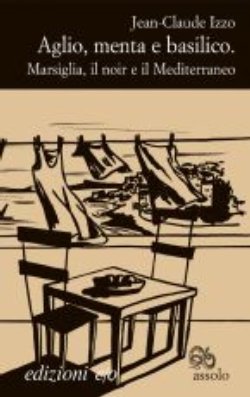
An Italian site reviews a collection of tales and other writing by Izzo that bears the delicious title of Aglio, menta e basilico – Marsiglia, il noir e il Mediterraneo (Garlic, mint and basil – Marseilles, noir and the Mediterranean). The sensual appeal of that title is beguiling, as are the reviewer's descriptions of how Izzo's detective protagonist Fabio Montale –"a Mediterranean man" – loves jazz, hip-hop, eating, drinking, gossiping for hours in bars ... What a life!

Izzo, reviewer Andrea Fannini concludes, is "a French, indeed, a Mediterranean poet."

© Peter Rozovsky 2006

Technorati tags:

Labels: , , , , ,

Friday, March 09, 2007

Romance and violence

Where music, poetry, memories and the Mediterranean go, romance is sure to follow. That was true in Total Chaos, the first novel in Jean-Claude Izzo's Marseilles trilogy, and it's even more the case in Chourmo, the second book.

Just six short chapters in, the protagonist, Fabio Montale, has yearned for lost loves, lost friends, lost opportunities, even for the tolerable aspects of his lost job as a police officer. These chapters are melancholy and gorgeous and full also of Izzo's sharp and sometimes unexpected political observations. The melancholy is enhanced by the reader's knowledge that the lost cousin whom Montale searches for has already been killed.

If you read French or Italian, Ile noire, Jazz al Nero and Andrea Fannini offer interesting discussions of Izzo. That last entry, a discussion of a book of Izzo's short writing called Aglio, menta e basilico – Marsiglia, il noir e il Mediterraneo, offers insight on the social and political concerns of Fabio Montale and the man who created him. And culinary concerns, too. The first part of the book's title means "garlic, mint and basil." Fabio Montale may be more melancholy in outlook than Andrea Camilleri's Salvo Montalbano or Manuel Vázquez Montalbán's Pepe Carvalho, but he eats just as well.

© Peter Rozovsky 2007

Technorati tags:

Labels: , , ,

Tuesday, March 13, 2007

A piece of prescience from Jean-Claude Izzo

Remember the French riots of 2005? Here's a passage from Chourmo, the second volume in Jean-Claude Izzo's Marseilles trilogy:

"[Pertin] wasn't directly responsible for Serge's death. Or Pavie's. But he was the symbol of a police force I hated. A police force in which political ideas and personal ambitions were placed above the values of the Republic, like justice and equality. ... If the suburbs exploded one day, it would be down to them. Their contempt. Their xenophobia. Their hate. And their shabby little schemes to become, one day, `a great cop.'"

Izzo published those words in 1996.

© Peter Rozovsky 2007

Technorati tags:

Labels: , , ,

Sunday, August 12, 2007

Crime in Ireland, crime in the wider world, and a question

Declan Burke, author of The Big O and keeper of the Crime Always Pays blog, sets his sights on the dimensions and foundations of the Irish crime-fiction boom here. He offers a lively review of the theories, and one might surprise you: "Money is the great leveller, and in an Ireland where the vast majority of the population have benefited from the economic boom, the erstwhile great and good can no longer depend on deferential treatment, while the moneyed classes are no longer deserving of their pedestal."

Further to the south, I've finished Solea, final volume in Jean-Claude Izzo's Marseilles trilogy. The novel is just as romantic as its predecessors, Total Chaos and Cheops, just as besotted with the light of Marseilles and just as pained by the memory of lost love. But this novel thinks globally, too. The narrative is punctuated with U.N. and other data about the hellish intermingling of the criminal and "legitimate" economies and with harsh criticism of governments, especially France's, for failing to act.

Izzo presents the information as research by a reporter whom the protagonist, Fabio Montale, is trying to find and protect. The excerpts are sprinkled throughout the novel, set it in italic type in chunks sometimes a page or two long. The presentation, set off narratively and typographically from the main action, functions like a play within a play, making its impact precisely because of its distinctive presentation.

And now, a question: That's how Jean-Claude Izzo presented blocks of factual information; how do your favorite writers do it? What thrillers make history or diplomacy come alive without making the story die? What police procedurals do a good job with forensic detail? What mysteries taught you much about an unfamiliar city or a new field of endeavor?

Or tell me about some novels that failed to do the job.

© Peter Rozovsky 2007

Technorati tags:


Labels: , , , ,

Friday, October 20, 2006

Jean-Claude Izzo's "Total Chaos": Music and Poetry

I'm nearly through Total Chaos, the densely atmospheric and downbeat first novel in Jean-Claude Izzo's Marseilles trilogy.

A few notes before a full-scale comment in the next day or two:

1) Too many noirish writers these days use a protagonist's musical tastes as shorthand for his or her state of mind. I'm not sure when writers started doing this in a big way; maybe Ian Rankin's John Rebus popularized it, with his taste for the Rolling Stones. In any case, the device has become a cliche, and it can seem cheap. You know, the author is too lazy to write how his hero feels like a boozy piece of crap, so he types the words "Tom Waits" and feels that he's done his job. (I wonder if writers picked this up from the by-now stereotypical moody saxophone soundtrack of countless crime movies and TV shows.)

Two things set Izzo apart from this group. The first is that his Fabio Montale's musical tastes are better and more varied than those of most modern noir protagonists. He listens to Paco de Lucia and lots of Michel Petrucciani, for example. French singers. Italian singers. Other characters listen to Marseillais rap or to rai. This music is different enough that it serves as a real character marker and mood setter rather than just an easy label.

The second is a frequent poignance of presentation. Montale hears music coming from another room or from inside an apartment. Outside, he muses on the music and the person playing it, and on his separation from her. This, I think, contributes to the sense of wistfulness and fatalism that some have seen in the trilogy.

2) There's poetry here. Characters recite it, read it, talk about it, reminisce about it. The poetry is usually intense and romantic, and so is the effect. In only one scene does the poetry seem an affectation, because there is too little poetry, and too much talk about poetry. I felt torn from the novel's fictional world and plunked down in a lecture from Izzo about what he liked. When reading a novel, I care nothing for the author, everything for the characters.

© Peter Rozovsky 2006

Labels: , , , , , , ,

Thursday, July 12, 2007

Now, THAT'S how to mix fiction and music

Haruki Murakami's essay "Jazz Messenger" in the New York Times says all that needs to be said about fiction and music. Here's part of it:

Whether in music or in fiction, the most basic thing is rhythm. Your style needs to have good, natural, steady rhythm, or people won’t keep reading your work. I learned the importance of rhythm from music — and mainly from jazz. Next comes melody — which, in literature, means the appropriate arrangement of the words to match the rhythm. ... Next is harmony — the internal mental sounds that support the words. Then comes the part I like best: free improvisation. Through some special channel, the story comes welling out freely from inside. ...

Finally comes what may be the most important thing: that high you experience upon completing a work — upon ending your performance” and feeling you have succeeded in reaching a place that is new and meaningful.

Here's some of what I wrote last fall about Jean-Claude Izzo:

Izzo seems to have had music very much on his mind as he wrote Total Chaos. This shows not just in the frequent invocations of music to set mood and define character, but also in a small aspect of the book's construction. The protagonist and two friends who figure prominently are of Spanish or Neapolitan stock. The milieu of the novel is 1990s Marseilles, which has new minorities, some African but mostly Arab. Throughout the novel, the protagonist and narrator, Fabio Montale, compares and contrasts the older immigrants with their newer counterparts. These observations are commentaries on the main action, something like a secondary theme recurring in a symphony and responding to the main theme.

As in a symphony, the observations build to a climax. As Montale's world reels into total chaos (bodies pile up, killers and victims turn out to be connected in unexpected ways, and fascists of an especially evil kind turn up in high places — or dead), the comparison of poor white Italian and Spanish immigrants with poor dark-skinned Arabs intensifies into identification. In one of the novel's numerous flashbacks, Montale and friends comtemplate with grim amusement the situation of Spanish and Neapolitan immigrants to Marseilles. "What are we, after all?" one friend asks, to which the other responds "Arabs!" and all burst into laughter, the climax and the realization of all that had been implied first by comparison and then by identification.
© Peter Rozovsky 2007

Technorati tags:

Labels: , , ,

Wednesday, January 16, 2008

Ethics and crime stories?

Clea Simon posed some questions on this subject last month on her blog. Her queries included:

Do you think mysteries have or promote ethical systems?
Do you care if justice is served?
and, perhaps most provocative,
can a book be moral or immoral?

I'll pass those questions on to you, but I won't let you off with any yes/no answers. Instead, I'll ask how a crime novel or story can express its ethics in ways other than simply the good guy winning in the end. Is ethics the same as justice? What about stories in which a villain wins or no one wins? What can one say about the ethics systems of such stories? Be sure to give examples!

Such writers as Yasmina Khadra, Jean-Claude Izzo, Jean-Patrick Manchette and perhaps Matt Rees upend or put novel spins on the good-guy-wins-in-the-end ending. One variant is the good-guy-left-standing-alone ending. What others can you think of?

© Peter Rozovsky 2008

Technorati tags:


Labels: , , , , , ,

Friday, August 10, 2007

More musical notes

Second page, first chapter of Jean-Claude Izzo's Solea, and the protagonist is already listening to music:

"When I came in, Léo Ferré was singing:

"`I sense the arrival
of trains full of Brownings,
Berettas and black flowers
And florists preparing bloodbaths
For the news on color TV ... '"


That's a stunning passage for the starkness of its content, to be sure, but also because of the slight awkwardness presumably introduced by the translation and because of the song's unfamiliarity, at least to me. The last two reasons may be more essential than the first to the passage's success.

Too often, popular music fails as an indicator of character in crime fiction precisely because it's so popular. If it's part of everyone's mental landscape, how can it signify a character's uniqueness? For me, a song can work better in fiction if I don't know it. When that happens, the author and I have to do the work. My experience is not filtered through countless listenings, half-heard snatches, radio, records, background music, television, commercials, ring tones and media hype.
======

Jim Fusilli has an interesting, ambivalent take on music in his story "The Ghost of Rory Gallagher," from the Dublin Noir collection. The central character is obsessed with the Gallagher of the title, a fiery Irish rock guitarist who died in 1995. That character listens to Gallagher with a passion that I'm guessing Fusilli shares.

On the other hand, the character's grasping, overweening love for the musician is a lampoon of the hysterical worship of rock and roll guitarists that has been around at least since a graffito proclaimed that "Clapton is God." The character is a villain, an unscrupulous trader whose depradations bring ruin to scores of people and who is willing to pay vast sums of money for rare Gallagher recordings. It's easy to read this as a criticism of rock and roll's failed promises of escape, equality, love and justice.

© Peter Rozovsky 2007

Technorati tags:


Labels: , , , , , ,

Tuesday, September 15, 2009

Thought for food

Little says as much about cultural differences as contrasting attitudes toward food. To crime writers from North America or from Europe's colder countries, food is an indicator of squalor, an objective correlative of bachelor solitude, or a sign of eccentricity.

Get closer to the Mediterranean, and food is life. Here's an example from The Terra-Cotta Dog, Andrea Camilleri's second novel about Inspector Salvo Montalbano. A sympathetic journalist friend rescues the hapless Montalbano from the ordeal of a press conference that follows the mysterious arrest of a mobster named Tano:

And just to make things even harder, there were the adoring eyes of Corporal Anna Ferrara, staring at him from the crowd.

Niccolò Zito, newsman from the Free Channel and a true friend, tried to rescue him from the quicksand in which he was drowning.

"Inspector, with your permission," said Zito. "You said you met Tano on your way back from Fiacca, where you'd been invited to eat a
tabisca with friends. Is that correct?"

"Yes."

"What is a
tabisca?"

They'd eaten
tabisca many times together. Zito was simply tossing him a life preserver. Montalbano seized it. Suddenly confident and precise, the inspector went into a detailed description of that extraordinary, multiflavored Italian pizza.
And there the chapter ends.

No authors combine food and crime with greater zest than Camilleri, Manuel Vázquez Montalbán and Jean-Claude Izzo. And few crime writers can have been as committed men of the left as these three. Izzo wrote with great sympathy of Marseilles' Arab population, and he worked for Pax Christi, a Roman Catholic peace movement. Vázquez Montalbán was active in anti-Franco movements. Camilleri joined the Italian Communist Party, and his books are filled with funny, bitter denunciations of Italian politicians and their service to the Mafia.

This must seem especially exotic to American crime-fiction readers, for whom the words food and mystery are likely to evoke thoughts of cozies with recipes, and for whom commitment of any kind is likely to seem antithetical to anything so hedonistic as good food.

© Peter Rozovsky 2009

Labels: , , , , ,

Thursday, February 15, 2007

Mystery music

What kind of music does your favorite fictional detective listen to? What sounds course through the pages of your favorite crime fiction?

Sherlock Holmes liked to play the violin, even if Watson did not always enjoy listening. Thanks to technology and economics, today's protagonists are spared the effort of learning and practicing an instrument. They can listen to records, tapes and CDs, and I suppose younger fictional crime-solvers are hooking themselves up to their MP3 players even as we speak because their creator wants to set a mood or to reveal something about a character that only Tom Waits or Tupac or Nirvana can say.

Uriah at Crime Scraps notes that Ake Edwardson's Erik Winter likes jazz and asks: "will it be my kind of jazz, Armstrong, Basie, Hawkins, Spanier and Goodman or more modern stuff ?" I'm sure a toot of Ornette Coleman would not put Uriah off a novel he was otherwise enjoying, but his post did get me thinking about how an author uses music to build a fictional world.

Jean-Claude Izzo's Fabio Montale listens to music as hot, as rich, as spicy and as varied as his hometown of Marseilles. That works for me in part because I know some of the music Montale likes, I'm intrigued by the music I don't know, and in large part because his tastes are distinctive. And it's not just newer writers. Jonathan Latimer made sparing and effective use of radio music in his William Crane novels in the late 1930s.

Then there's Ian Rankin, whose detective, John Rebus, listens to the Rolling Stones, sometimes in books that share titles with Stones albums: Let it Bleed, Black and Blue, Beggars Banquet. I don't begrudge Rebus his love of the Stones, but their popularity is so widespread that a taste for their music is not unusual enough to serve as a distinctive character marker. Maybe that's supposed to be part of Rebus' everyman charm. It won't work for me until Rankin can tell me why Rebus' reaction to the Stones is different enough from yours or mine to hold my interest.

The same goes for Ken Bruen's protagonists. Rock and roll is so mainstream these days that it's tough for an author to use it as a mark of distinctiveness, despair or much of anything, really. It's as banal as using brand names to set the tone of a place and time.

N.B. I've had to amend my comment on Ken Bruen. He actually does some nice things with music in his books, and I've mentioned them in comments to this post. I'm still no big fan of the epigraphs from songs and crime novels that he uses as chapter headings. If I recall correctly, Bust, Bruen's hilarious collaboration with Jason Starr, even uses a quotation from another Starr novel as a chapter heading. That doesn't seem quite right, somehow. Of course, it doesn't have anything directly to do with music, either.

© Peter Rozovsky 2007

Technorati tags:


Labels: , , , ,

Monday, October 08, 2007

Maigret and the Wonderful Meals

Years before Andrea Camilleri's Salvo Montalbano or Jean-Claude Izzo's Fabio Montale ate their first fictional meals, there was Inspector Jules Maigret. Georges Simenon's creation is, of course, right up there with Sherlock Holmes among the world's most popular fictional detectives. If benefit of the doubt goes to the detective who eats best, though, Maigret leaves the competition trailing in a cloud of kitchen aromas and pipe smoke.

Thirty-two years ago, in fact, a noted French food writer and a prestigious publisher got together to produce Madame Maigret's Recipes, a collection of instructions for the most enticing dishes from the seventy-five Maigret novels and twenty-eight short stories.

Robert J. Courtine, author of books on French cooking and of a food column for the French newspaper Le Monde, translated into recipes the dishes that Maigret enjoys so much at neighborhood bistrots, on his investigations all over France and, most memorably, in his own kitchen, as prepared by Mme. Maigret. The dishes are classified by type, and each is preceded by an excerpt or excerpts from Maigret stories in which the dish is mentioned.

These brief selections convey the flavor of Maigret's wanderings throughout France and of his leisurely love of a good meal. The juxtaposition of food talk with the sometimes grim titles of the stories from which it taken is also good for a smile, as in this introduction to Courtine's recipes for filets de harangs, or fileted herring:

"Bring us a carafe of Beaujolais right away. What's on the menu?"

"
Andouilettes. Just came in from Auvergne this morning."

"Maigret decided to start with
filets de harangs."

Maigret and the Madwoman

Each recipe comes with Courtine's comments ("You can shell the mussels completely — they'll be easier to eat, but it won't look so amusing."), including suggestions for possible substitutions. The American edition, at least, includes a useful glossary of French wines along with suggested American substitutions. The publisher, by the way, is the Helen and Kurt Wolff imprint of Harcourt Brace Jovanovich.

The book is out of print, unless I am mistaken, but you may be able to find a copy in a secondhand bookshop, as I did. The entertaining, zestful writing may turn you into a fan of Maigret, of French cooking, or of both, even if you know nothing about either when you pick the book up.

© Peter Rozovsky 2007

Technorati tags:


Labels: , , , , , ,

Monday, September 13, 2010

Writer beyond borders: An interview with "Zulu" author Caryl Férey

Caryl Férey's Zulu has not been out long in English translation, but two South African crime writers have already called it one of the top African crime novels.
The book, a violent exploration of contemporary South Africa, won the Grand Prix de Littérature Policière, France's top award for crime fiction, on its original publication in 2008. Europa Editions has issued an English translation by Howard Curtis, whose previous work includes translations of Jean-Claude Izzo's Marseilles trilogy.
In an interview with Detectives Beyond Borders, Caryl Férey talks about violence, paranoia, the role of noir writers, and the things that he, a Frenchman, could say about South Africa that a South African author never could. He also reveals how and why he writes only during the summer.
===================

Detectives Beyond Borders: You’re a kind of literary traveler: South Africa, Argentina, New Zealand. Why do you choose to work this way?

Caryl Férey: I travelled around the world when I was twenty years old. I discovered New Zealand, and I adored New Zealand. ... I discovered the “others,” the desire to write about what was happening abroad.

You found this more interesting than your own country?

Completely. ... As I always liked travelling and writing, so I could do them together: travel and write and, in addition, to use trips for writing.

A different country for each book?

In New Zealand I wrote two books.
Not yet translated into English?

Not yet, but they tell me soon. ... I never want to write the same book, that takes place in the same location, because I always want to write something different. That's why I generally kill off my hero at the end. So there is no continuation, and this lets me go look into another country.

It takes me three or four years to write such a book. After three or four years, I have the feeling of having taken in all the country’s problems. I don’t have much more to say. I try to put everything into the one book and then go somewhere else.

Often the Southern Hemisphere because when it’s winter in France, it’s summer down there, so I always leave in winter. I have a year of summer.
What are the advantages to writing as a traveler? What are the disadvantages?

I think it’s an advantage because there are taboos on all societies. In South Africa, for example, there’s the taboo around the Zulu Inkatha, and the ANC of Mandela. There was a civil war manipulated by apartheid, and no one talks about it.

Even today?

Completely. But I understand. Mandela, when he took power, said no, no. That was horrible, apartheid. We won’t talk about it any longer. Everyone is together. Tomorrow is more important than yesterday. ... Something extraordinary happened. He had De Klerk, the white Afrikaaner. He had Buthelezi, the chief of Inkatha, and when he took power, he raised their arms.

As an outsider, I can talk about this. I can talk about the war between Inkatha (and the African National Congress). It’s no problem for me. A South African, for reasons of national reconciliation, will not talk about it.

Why Zulu as a title? Why not Xhosa, or Afrikaaner?

That was just to discuss the war between the Zula Inkatha and the Xhosa ANC. Because I knew the area around Cape Town, my journalist friend lived in Cape Town, my book takes place in Cape Town. There are no Zulu in Cape Town, very few. The Zulu live in another part of South Africa, far away.

So, to talk about the problem of the war between the Zulu Inkatha and the ANC, I took a Zulu character (homicide detective Ali Neuman), I put him in Cape Town. He takes refuge in Cape Town, because his father was pro-ANC, even though he was Zulu. One could be Zulu and for the ANC.

There were people who understood that Mandela was the symbol of resistance against whites, and they understood that Buthelezi and the Zulu Ikatha were manipulated by apartheid. So for me, it was a way to talk about this civil war
.
Many South African crime novels are extremely violent. Is such violence more striking for white readers than for black readers?

Unfortunately for Africans, they live among violence. It’s everywhere. For us it’s more shocking because we are unaccustomed to living with violence all the time. Blacks who live in the townships, they live with violence. But us, whites, we are not used to living with barbed wire, fencing, electronic security. Houses in South Africa have this, electricity everywhere to protect the houses.

... We’re not accustomed to this violence, so we have the roman noir as a catharsis. For us, who have an ultra-securitized society, we are even more scared of violence. By contrast, I think that if I were a black South African author, I would not write about a violent life. What would interest me would be love stories, that kind of thing, because “Violence? OK, we know it.”

The Irish crime writer Alan Glynn talks about the 1970s as a golden age for books and movies of paranoia: The Conversation, The Parallax View. He says that our own age is good time for a revival of such books and movies. Is Zulu a novel of paranoia?

Completely paranoid, just like white South African society is paranoid. At the same time, there is good reason to be scared because there is so much murder and rape, but most rape and murder happens between blacks. It is often blacks who suffer.

This is a kind of golden age for South African crime fiction. Do you know many of the current South African crime writers?

Very few. I have just met Deon Meyer, but I don’t know the others. But the poor are fantastic society for writing a roman noir.

It’s like the Americans If American authors are so good, and American authors are superb, it’s because they have a terrible society, with enormous gulfs between rich and poor.

All the most interesting ingredients for me are not in France. That’s why I go back to Argentina. There was the dictatorship. There was the crisis of 2002. These are fantastic subjects for romans noirs. ...

With Sarkozy, France has more and more subjects for romans noirs: xenophobia, pitting one community against the other. He’s playing a very dangerous game, this guy.

... I think the role of noir authors is to detect— You have to get your nose down in the shit. That's our job, a little bit. We say, “Look! Look what’s happening there and there and there!”

© Peter Rozovsky 2010

Labels: , , , , , ,

Saturday, December 08, 2007

Some sensible words about crime fiction and a question for readers

I generally squirm at discussions of genre vs. “serious” fiction, especially when it comes to my genre, crime. Anti-genreists are snobs, pro-genreists exaggerate their claims. More to the point of these debates, what’s their point? I can enjoy Fred Vargas or Ken Bruen or Ruth Rendell without agonizing over whether they are as worthy as James Joyce or Tolstoy or Ralph Waldo Emerson.

James Fallows’ recent posting on The Atlantic’s Web site, though, held my interest, and not just because he singled out some crime novelists whose work I especially enjoy. No, what makes Fallows’ essay stand out is that he bases his assessment on the actual experience of reading the books:

“I've figured out a way to tell the books I can feel good about reading from the ones I should wean myself from. The test is: can I remember something from the book a month later – or, better, six months or a year on. This is the test I apply to `real' fiction too: surprisingly often, a great book is great because it presents a character, a mood, a facet of society, a predicament that you hadn't thought of before reading the book but that stays with you afterwards. Rabbit Angstrom, Captain Ahab, and Clyde Griffiths (of An American Tragedy), to choose the first three examples that pop into my mind from American fiction.

“I say that `genre' fiction, like spy and crime novels, ascends into the `real' fiction category when the world it presents can exert the same tenacious hold on your mind.”

Among the crime novels that Fallows says meet that standard are Janwillem van de Wetering’s early “Amsterdam Cops” books (though he cites an odd reason for liking them, and he misspells van de Wetering’s name), and Inspector Imanishi Investigates by Seicho Matsumoto.

I agree with those choices, and I would add a few that present “a character, a mood, a facet of society, a predicament that you hadn't thought of before reading the book but that stays with you afterwards”: Yasmina Khadra’s novels about life in war-torn 1990s Algeria, the delicious social comedy of Bill James’ middle-period Harpur & Iles novels, and perhaps the yearning hope and despair of Jean-Claude Izzo’s Marseilles trilogy.

OK, readers, what crime writing does the same thing for you? From which books can you “remember something from the book a month later – or, better, six months or a year on”? (Hat tip to Sarah Weinman.)

© Peter Rozovsky 2007

Saturday, April 05, 2008

Noir Con 2008, Part II — No boundaries?

OK, maybe some boundaries, though no one at NoirCon 2008 seemed to be able to figure out precisely what noir is and isn't. Happily, no one seemed to worry much about this, and the confusion gave rise to some pregnant thoughts on Day Two, Year Two of this fine Philadelphia crime-fiction convention.

And why should I worry about what is international crime fiction and what isn't at a conference with a French name ("Noir") devoted to an American art form that honored an Irish author (Ken Bruen) and a publisher (Dennis McMillan) whose offerings have included seminal Dutch and Australian crime writers?

Highlights from Day Two:

1) Jason Starr's observation toward the end of his Friday panel discussion with Ken Bruen that "The French have a much wider definition of noir" than do Americans. Could he have meant that the French critics who coined the term as applied to film and fiction in the middle of the last century emphasized atmosphere more than today's writers do?

I recall a television interview with the director Jean-Pierre Melville and the star Alain Delon included as a DVD extra with one of Melville's movies. In today's terms, Delon was a laughable parody of cool, literally staring into space and blowing smoke while Melville talked about the movie. From the viewpoint of, say, any time after maybe the early '70s, that looks more kitsch than noir.

Maybe he meant that French writers have taken noir in directions more political than American crime writers have explored (Jean-Patrick Manchette, Jean-Claude Izzo, Didier Daeninckx)?

2) Bruen's declaration during the same discussion that, after having written a few "straight" novels, "I really wanted to write a crime novel, but I wanted to see if I could write it the way the American hard-boiled school writes."

3) The award for the publisher Dennis McMillan, whose offerings have included books from Janwillem van de Wetering, Robert van Gulik and Arthur W. Upfield.

4) News from Akashic Books that another novel from Juan de Recacoechea, author of American Visa, is being translated into English as we speak.

© Peter Rozovsky 2008

Labels: , , , , , , ,

Tuesday, February 03, 2009

The Buenos Aires Quintet

There's more going on in The Buenos Aires Quintet than in most crime novels, so it's no surprise that author Manuel Vázquez Montalbán was not just a crime novelist. He was also a "journalist ... poet, essayist, anthologue, prologist, humourist, critic, as well as a gastronome and a FC Barcelona supporter."

In fact, the Colegio de Periodistas de Cataluña awards two prizes named for Vázquez Montalbán, one in sports journalism, the other in cultural or political journalism. There's a bit o'boxing in this novel, and politics and culture? You name it, and it's here, from tango, meditations on Jorge Luis Borges and Catalan food to pointed jokes about Carlos Menem, Argentina's president when Vázquez Montalbán wrote the book.

Mostly, the book is a moving psychological travelogue through Buenos Aires in the years after Argentina's military dictatorship, an "almost unreal" city, perhaps fitting for a novel in which the shade of Jorge Luis Borges figures prominently.

Though Vázquez Montalbán plucks his nihilistic gourmand of a detective, Pepe Carvalho, from Barcelona for this novel (he's looking for his uncle's missing son), fans need not worry. Carvalho still manages to eat well, staying in frequent touch by phone with his chef/assistant, Biscuter, back home for culinary advice.
============================
Here's a retrospective and a pair of reviews from the Barcelona Review on the occasion of Vázquez Montalbán's death in 2003. The article contains spoilers, but you won't lose much if you know something about The Buenos Aires Quintet's plot beforehand. The book is too rich a trip for that.

And I have just found a link to the abstract for a thesis by one Anna Maria Valsecchi from the Università degli Studi di Bergamo titled in English translation When the Mediterranean hosts a detective story: Manuel Vázquez Montalbán, Andrea Camilleri, Jean-Claude Izzo. That's one thesis that I bet was fun to write.

© Peter Rozovsky 2009

Labels: , ,

Saturday, November 14, 2009

Murder and Mayhem in Muskego V

I finally made it off the ground after nine hours at Philadelphia International Airport. Ruth Jordan had driven to Milwaukee's airport to pick me up. Unfortunately I was in a taxi to the Jordans' house at the time, and I was at the top of the stairs to welcome Ruth back to her own hospitable home.

I've learned from Brian Azzarello the inspiration for 100 Bullets (a driver who cut Azzarello off) and that Sam Reaves, who also uses the name Dominic Martell for his Barcelona thrillers, likes that other Barcelona crime writer, Manuel Vázquez Montalbán. (He likes Jean-Claude Izzo, too.)

I also found interesting C.J. Box's answer to a question about authors, blogs and social media such as Facebook: "Modern readers, I think, require some kind of interaction with the author."

© Peter Rozovsky 2009

Labels: , ,

Tuesday, September 27, 2011

Gianrico Carofiglio, Howard Curtis, and a translator's challenge

(Games People Play)
A reader's complaint, an incautious reply, and a translator's thoughtful explanation have revived one of this blog's oldest questions: What cultural and linguistic challenges does a translator face?

The complainer objected to the name chosen for a poker game in the Gianrico Carofiglio novel translated in English as The Past is a Foreign Country:
"The fat man cut the cards and said, 'Five card stud.' He said it in the same tone of voice he'd used all evening. What he thought of as a professional tone. A good way to recognize an easy mark at a poker table is to see if they use a professional tone.

"He dealt the first card face down and the second one face up. A professional gesture, as if to prove my point."
"Who is Carofiglio kidding?" my reader objected. "There's no other way to start a game of five card stud. Playing the first card face down and second one face up wouldn't tell you jackshit about anybody."

I speculated that five-card stud might be a rough English equivalent for a game in the novel's original version whose Italian name English and American readers would not recognize, and it turned out I was right. Rather than a lapse on Carofiglio's part, I wrote, "We've uncovered some sloppy work by the translator, then."

Today the translator weighed in with a reply that made me ashamed of my flip comment. That translator is Howard Curtis, and here's what he had to say:
"Sorry I've only just seen this thread. As translator of The Past is a Foreign Country, I'd like to comment on the above remarks about my `sloppy work' on the poker aspects of the book. Not being a poker player myself, I had to do some research when translating these sections, and `five card stud' did seem to be the most accurate translation of what was being played at that point. The poker references were checked and approved by someone at the publishing house who knew about poker, and the original UK edition carried a preliminary note explaining that this was an Italian version of the game, employing a 32-card deck. I haven't seen the US edition, so I don't know if this note was reproduced."
Having written about the challenges translators face, I should have speculated about Curtis' choice rather than dismissing it. In any case, it appears this problem was difficult, if minor. The U.S. edition of the book does, indeed, offer an explanatory note, but is that enough? I'd read the novel without noticing the note.  The poker references passed muster at the publishing house, but not with a reader out there in cyberland (Ireland, actually). Could translator or publisher have chosen another way to explain the game?

I suggested that the translator might use the original Italian name a time or two in the text, perhaps with an unobtrusive explanation, and let context take care of the rest. Would that have worked? I don't know, but I am reminded once more of how bloody difficult a translator's job can be, especially if the work in question is popular fiction, where ease of reading is paramount.
***
Howard Curtis is an experienced translator from French, Italian and Spanish. Among novels discussed here at Detectives Beyond Borders, his translations include works by Carofiglio, Jean-Claude Izzo, and Caryl Férey.

© Peter Rozovsky 2011

Labels: , , , ,

Tuesday, September 28, 2010

A deadpan novel by the father of Italian noir

The deadpan description in the opening chapters of Giorgio Scerbanenco's Duca and the Milan Murders (1966) reminded me of Jean-Patrick Manchette. That French author, I once wrote, restored crime writing's ability to shock "with tales of what power can do to those it finds convenient to crush."

So I was pleased to read in the Wikipedia article about Scerbanenco that "his style was notable for the realistic way in which [it] conveyed and evoked the helplessness and despair of weak people being cruelly victimized."

One interesting note: While Manchette was a man of the political left, the Ukrainian-born Scerbanenco's "virulent and over-the-top anti-communism ... stemmed from the trauma of losing his father during the Russian revolution," according to the same article. Before New Rightniks claim him as one of their own, though, they should note that

"While denouncing the evils of the rampant consumeristic and greedy way of life taking hold from the 60s onward Scerbanenco always has a warm word for the peaceful, quiet, hard-working Milanese"
A French translation of Duca and the Milan Murders won the Grand Prix de Littérature Policière for international crime fiction in 1968 (The novel's Italian title, Traditori di tutti, translates as Betrayers of All.) Scerbanenco is considered the father of Italian noir, and Italy's top crime fiction prize is named for him.

None of Scerbanenco's work is in print in English, as far as I know. If they would consider reprints, this book would make a fine addition to Europa Editions or Serpent's Tail's lists alongside such authors as Carlo Lucarelli, Jean-Claude Izzo, Gene Kerrigan and Manuel Vázquez Montalbán.

Here's a bit about the author and the book. And here's a short excerpt:

"Dr. Duca Lamberti?"

The voice, too, was offensive in its exemplary politeness, its exemplary diction. It was a voice that would have done credit to a teacher of elocution. Duca detested perfection of this sort.

"Yes, I am Duca Lamberti." He stood there blocking the doorway. He did not invite the caller in. The way he dressed seemed to Duca odious. Admittedly, it was spring, but this young man was already going about in a cardigan, no jacket, just this light grey cardigan with dark grey suede cuffs, and—in case anybody should imagine that he could not afford a jacket—he was carrying a pair of light gray driving-gloves, not the cheap kind with no backs, but real gloves, good gloves, with leather backs and intricately crocheted palms. It was impossible to avoid noticing these details. The gloves were very much on show, as though to make it quite plain that their owner possessed a car worthy of such a handsome pair of gloves.

"May I come in?" He was glowing with cordiality, insincere cordiality, insincerely spontaneous.
© Peter Rozovsky 2010

Labels: , ,

Friday, August 07, 2009

Here's a better idea

Instead of discussing what I didn't have time for on the radio Wednesday, here are the notes I carried with me into the studio. I guess this would have been a bit much to get to in one hour.

Listen here to hear what we did get to.
==============================

Latest Here on Earth notes
Date: Wednesday, August 05, 2009 12:06 AM

Seicho Matsumoto: Inspector Imanishi Investigates, Points and Lines. Trains and their role in Japanese society.

Jakob Arjouni: Plight of Turkish gastarbeiter in Germany.

Matt Beynon Rees: The Arabic review that explained an investigator's job is to find out the truth.

Post-Troubles and Troubles off-shoots in Northern Ireland: How does one cope? a) Garbhan Downey b) Adrian McKinty, who penetrates into the heart of America. c) Brian McGilloway, who sets novels on the border, Borderlands. d) Stuart Neville, Ghosts of Belfast.

Arnaldur Indriðason: Takes superb advantage of setting in Jar City, The Draining Lake. "One problem for Icelandic crime writers is that we have almost no crime."

Manuel Vazquez Montalban: Has a private cook, Biscuter. Was jailed under Franco. The Buenos Aires Quintet. (Political. Mediterranean. Food.)

Andrea Camilleri: Salvo Montalbano (named for Montalban) loves food, prickly but increasingly tender as the series goes on. Excursion to Tindari, Smell of the Night, Patience of the Spider. (cf. Simenon) (Political. Mediterranean. Food.)

Jean-Claude Izzo: Loves food, music, poetry, Marseilles. Predicted the riots in the banlieues. The Marseilles Trilogy (Political. Mediterranean. Food.)

Humor and Scandinavians: Jo Nesbø (The Redbreast, Devil's Star, Nemesis); Håkan Nesser (The Return); Karin Fossum (He Who Fears the Wolf)

Qiu Xiaolong: Death of a Red Heroine. Slow buildup through pollution of Shanghai. Anti-climax of the perps' hasty execution.

Canadian setting and the border: John McFetridge (Everybody Knows This Is Nowhere, Dirty Sweet); Howard Shrier (Buffalo Jump, High Chicago); Boldness of a Canadian setting: Sandra Ruttan: What Burns Within. Arson. Ensemble cast.

Fred Vargas: Slow buildup. Wash This Blood Clean From My Hand.

Pierre Magnan: Rural life, slow pace, neuroses, acceptance. Death in the Truffle Wood.

Irish writers and Americans: Ken Bruen ("All my influences are American. That's how to I learned to read. That's how I learned to write.") Declan Burke loves Chandler. Brian McGilloway on the American West. Declan Hughes loves Margaret Millar, Ross MacDonald.

Yasmina Khadra: (Army officer, self-imposed exile, wrote in French because his teacher encouraged him)

Bill James, Peter Temple: Best prose stylists.

Clive James:

" . . . there are only so many storylines and patterns of conflict. The only workable solution has been to shift the reader's involvement from the center to the periphery: to the location. In most of the crime novels coming out now, it's a matter not of what happens but of where. Essentially, they are guidebooks."

Misc. exotic settings: Eliot Pattison (Tibet). Double outsider: Exiled Han Chinese prisoner in Tibet. Michael Walters (Mongolia)

Translation: Stephen Sartarelli on the richness of Camilleri's language. Sian Reynolds on translating wordplay. Mike Mitchell on Glauser's dialects. Don Barlett on Vibes gate. Janwillem van de Wetering: Translating canals' names to show their silliness.

Crime fiction crossed borders from the beginning:

"One should remember also that crime fiction was international from its beginnings. Poe's C. Auguste Dupin was a French crime solver created by an American. This is no mere accident of history. There is reason to believe, as one Poe scholar says, that an older society such as France was more prepared than the young United States to accept a writer who probed the dark side the way Poe did."

Chinese crime plays that became novels in the 18th century. Robert Van Gulik.

Crime fiction as a key to history: Carlo Lucarelli's De Luca novels

Crime fiction as a key to politics: Jean-Patrick Manchette's political noir (The Prone Gunman, Three to Kill.); Helene Tursten, Kjell Eriksson

Exotic locations (with respect!): Colin Cotterill and Dr. Siri.

Timothy Hallinan: Struggles as an outsider.

Brazil: Luiz Alfredo Garcia-Roza, Leighton Gage

Publishers: Bitter Lemon, Serpent's Tail, Quercus, Harvill Secker. Vertical (Japan, Korea)

Dominique Manotti: Corporate villains.

Stieg Larsson + Michael Jackson: Together in Borders window
#
© Peter Rozovsky 2009

Labels: , ,

Thursday, April 05, 2007

... and I'm working that week

Black & Blue: Mediterranean Noir Comes to New York, April 25-28, is dedicated to the memory of Jean-Claude Izzo. Its programs of readings and discussions includes appearances by Yasmina Khadra, Carlo Lucarelli, Massimo Carlotto and Alicia Gimenez-Bartlett and a documentary film featuring Lucarelli and Andrea Camilleri.

Labels: , , ,