Sunday, September 03, 2017

Adrian McKinty wins another award

Adrian McKinty's novel Police at the Station and They Don't Look Friendly has won Australia's Ned Kelly Award for best crime novel. The award follows his capture of the Best Paperback Original prize at the Edgar Awards in New York this past spring for Rain Dogs. Here's what I had to say about Police at the Station and They Don't Look Friendly earlier this year.
====================
 Adrian McKinty's Sean Duffy series, now six novels into what was once called the Troubles Trilogy, keeps getting better and better.

The language is gorgeous, the characters are endearing, the atmosphere full both of humor and of off-hand, everyday life, menacing and otherwise. With this much good crime writing coming out of Northern Ireland, how can anyone mention the Nordic countries in the same breath? Hell, how about the rest of the world? With McKinty ably supported by a cast that includes Stuart Neville just as a start, why is Northern Ireland not routinely numbered among the world's great crime fiction locations?

McKinty's books portray their settings as vividly as do Arnaldur Indriðason's Erlendur novels, set in Iceland (and they're a lot funnier). His Sean Duffy is as endearingly flawed as Andrea Camilleri's Salvo Montalbano (Poetry and music are to Duffy what food is to Montalbano, and the two characters lead similarly complicated romantic lives, although— but you'll have to read Book Six, the recently released Police at the Station and They Don't Look Friendly, to complete that thought.)  McKinty's Belfast is every bit as vivid a crime fiction locale as Jean-Claude Izzo's Marseille.  And he turns as unsparing an eye on that locale as Maj Sjöwall and Per Wahlöö did on Sweden in their Martin Beck novels

Not only that, but McKinty deftly takes on any number of traditional mystery and crime tropes, and the Duffy series and their protagonist are erudite without being condescending. McKinty has also long attacked the notion that a writer's style ought to be workmanlike and invisible. He champions David Peace and James Ellroy, for example, so you know you're bound to find a gorgeous passage or two, prose you can relish for its own sake, in every book.  And if you listen to books, you're in for a treat. Gerard Doyle, the reader of the Sean Duffy audiobooks, is a master of accents, and he gives each character a distinct voice without ever descending to bathos and exaggeration. The audio versions pair the best of crime novels with the best of audiobook readers.

(The five previous Sean Duffy novels are The Cold, Cold Ground; I Hear the Sirens in the Street; In the Morning I'll be Gone; Gun Street Girl; and Rain Dogs. I've been a McKinty fan for years. Read all my Detectives Beyond Borders posts about his work.)

© Peter Rozovsky 2017

Labels: , , , , , , , , , , ,

Tuesday, May 17, 2011

Detectives Beyond Borders on the radio — again

My 2009 appearance on Wisconsin Public Radio's Here on Earth program will be rebroadcast today at 4 p.m. Eastern Daylight Time. Dig that nifty opening theme, and find out what kind of voices the show's host, Jean Feraca, likes! In honor of WPR's rebroadcast, I'm bringing back a blog post I made after the show first aired.

Here's a summary of  what we talked about and what I would have liked to talk about had we had more time. (If you're just tuning in now, the Here on Earth link should still allow you listen to the archived program.)
=====================
I'm back from talking international crime fiction on the Here on Earth radio program, and how about a huzzah for Wisconsin Public Radio for hosting a show on that entertaining, enlightening topic? The broadcast is available for listening or downloading here or here.

I learned that radio is an astonishingly compressed medium. I was worried we'd run out of things to discuss, but we got to barely a tenth of the authors and subjects I'd prepared. So in the coming days, I'll post a series of outtakes, things I'd have discussed had there been time.

I did get to tout Ireland as a hotbed of crime fiction, to offer my definition of noir and to talk about Yasmina Khadra, Seicho Matsumoto, Henning Mankell, Patricia Highsmith, David Goodis, Ian Rankin, Matt Rees, Ken Bruen's Jack Taylor and Jo Nesbø's Harry Hole. My fellow guest and I both like Jean-Claude Izzo, so we talked about him awhile. (That fellow guest was Hirsh Sawhney, editor of Akashic Books' Delhi Noir, about which he made some interesting remarks.)

But, oh, the things I didn't get to: Corporate villains. Humorous Swedes. Canadian borders. Northern Ireland. Irish odysseys. Hard-boiled crime as America's gift to the world. Translation. Miscellaneous exotica. The world of publishing.

More to come. Oh, and the show's host, Jean Feraca, with whom I had never spoken before, said on air that I had a "nice voice." Bless you, Ms. Feraca.
==================
P.S.: Feraca gave me credit for a statement that I was only quoting. It was the Edgar Allan Poe scholar Shelley Costa Bloomfield who suggested that the French were ready and waiting for what Poe had to offer before Americans were: "Maybe it takes an older civilization to feel comfortable with the dark side and be able to enjoy it." I wish I'd said that, but Costa Bloomfield said it first.

P.P.S: Before anyone can point this out to me, I realize that I said, "If you will" once on the air. I shall suffer the consequences in the next life.

P.P.P.S. Finally, I think I got Seicho Matsumoto's death date wrong. That fine Japanese crime writer died in 1992. I think I killed him off twelve years prematurely.

© Peter Rozovsky 2009, 2011

Labels: , , , , , , , , , , , ,

Tuesday, September 15, 2009

Thought for food

Little says as much about cultural differences as contrasting attitudes toward food. To crime writers from North America or from Europe's colder countries, food is an indicator of squalor, an objective correlative of bachelor solitude, or a sign of eccentricity.

Get closer to the Mediterranean, and food is life. Here's an example from The Terra-Cotta Dog, Andrea Camilleri's second novel about Inspector Salvo Montalbano. A sympathetic journalist friend rescues the hapless Montalbano from the ordeal of a press conference that follows the mysterious arrest of a mobster named Tano:

And just to make things even harder, there were the adoring eyes of Corporal Anna Ferrara, staring at him from the crowd.

Niccolò Zito, newsman from the Free Channel and a true friend, tried to rescue him from the quicksand in which he was drowning.

"Inspector, with your permission," said Zito. "You said you met Tano on your way back from Fiacca, where you'd been invited to eat a
tabisca with friends. Is that correct?"

"Yes."

"What is a
tabisca?"

They'd eaten
tabisca many times together. Zito was simply tossing him a life preserver. Montalbano seized it. Suddenly confident and precise, the inspector went into a detailed description of that extraordinary, multiflavored Italian pizza.
And there the chapter ends.

No authors combine food and crime with greater zest than Camilleri, Manuel Vázquez Montalbán and Jean-Claude Izzo. And few crime writers can have been as committed men of the left as these three. Izzo wrote with great sympathy of Marseilles' Arab population, and he worked for Pax Christi, a Roman Catholic peace movement. Vázquez Montalbán was active in anti-Franco movements. Camilleri joined the Italian Communist Party, and his books are filled with funny, bitter denunciations of Italian politicians and their service to the Mafia.

This must seem especially exotic to American crime-fiction readers, for whom the words food and mystery are likely to evoke thoughts of cozies with recipes, and for whom commitment of any kind is likely to seem antithetical to anything so hedonistic as good food.

© Peter Rozovsky 2009

Labels: , , , , ,

Wednesday, January 16, 2008

Ethics and crime stories?

Clea Simon posed some questions on this subject last month on her blog. Her queries included:

Do you think mysteries have or promote ethical systems?
Do you care if justice is served?
and, perhaps most provocative,
can a book be moral or immoral?

I'll pass those questions on to you, but I won't let you off with any yes/no answers. Instead, I'll ask how a crime novel or story can express its ethics in ways other than simply the good guy winning in the end. Is ethics the same as justice? What about stories in which a villain wins or no one wins? What can one say about the ethics systems of such stories? Be sure to give examples!

Such writers as Yasmina Khadra, Jean-Claude Izzo, Jean-Patrick Manchette and perhaps Matt Rees upend or put novel spins on the good-guy-wins-in-the-end ending. One variant is the good-guy-left-standing-alone ending. What others can you think of?

© Peter Rozovsky 2008

Technorati tags:


Labels: , , , , , ,

Sunday, August 12, 2007

Crime in Ireland, crime in the wider world, and a question

Declan Burke, author of The Big O and keeper of the Crime Always Pays blog, sets his sights on the dimensions and foundations of the Irish crime-fiction boom here. He offers a lively review of the theories, and one might surprise you: "Money is the great leveller, and in an Ireland where the vast majority of the population have benefited from the economic boom, the erstwhile great and good can no longer depend on deferential treatment, while the moneyed classes are no longer deserving of their pedestal."

Further to the south, I've finished Solea, final volume in Jean-Claude Izzo's Marseilles trilogy. The novel is just as romantic as its predecessors, Total Chaos and Cheops, just as besotted with the light of Marseilles and just as pained by the memory of lost love. But this novel thinks globally, too. The narrative is punctuated with U.N. and other data about the hellish intermingling of the criminal and "legitimate" economies and with harsh criticism of governments, especially France's, for failing to act.

Izzo presents the information as research by a reporter whom the protagonist, Fabio Montale, is trying to find and protect. The excerpts are sprinkled throughout the novel, set it in italic type in chunks sometimes a page or two long. The presentation, set off narratively and typographically from the main action, functions like a play within a play, making its impact precisely because of its distinctive presentation.

And now, a question: That's how Jean-Claude Izzo presented blocks of factual information; how do your favorite writers do it? What thrillers make history or diplomacy come alive without making the story die? What police procedurals do a good job with forensic detail? What mysteries taught you much about an unfamiliar city or a new field of endeavor?

Or tell me about some novels that failed to do the job.

© Peter Rozovsky 2007

Technorati tags:


Labels: , , , ,

Friday, August 10, 2007

More musical notes

Second page, first chapter of Jean-Claude Izzo's Solea, and the protagonist is already listening to music:

"When I came in, Léo Ferré was singing:

"`I sense the arrival
of trains full of Brownings,
Berettas and black flowers
And florists preparing bloodbaths
For the news on color TV ... '"


That's a stunning passage for the starkness of its content, to be sure, but also because of the slight awkwardness presumably introduced by the translation and because of the song's unfamiliarity, at least to me. The last two reasons may be more essential than the first to the passage's success.

Too often, popular music fails as an indicator of character in crime fiction precisely because it's so popular. If it's part of everyone's mental landscape, how can it signify a character's uniqueness? For me, a song can work better in fiction if I don't know it. When that happens, the author and I have to do the work. My experience is not filtered through countless listenings, half-heard snatches, radio, records, background music, television, commercials, ring tones and media hype.
======

Jim Fusilli has an interesting, ambivalent take on music in his story "The Ghost of Rory Gallagher," from the Dublin Noir collection. The central character is obsessed with the Gallagher of the title, a fiery Irish rock guitarist who died in 1995. That character listens to Gallagher with a passion that I'm guessing Fusilli shares.

On the other hand, the character's grasping, overweening love for the musician is a lampoon of the hysterical worship of rock and roll guitarists that has been around at least since a graffito proclaimed that "Clapton is God." The character is a villain, an unscrupulous trader whose depradations bring ruin to scores of people and who is willing to pay vast sums of money for rare Gallagher recordings. It's easy to read this as a criticism of rock and roll's failed promises of escape, equality, love and justice.

© Peter Rozovsky 2007

Technorati tags:


Labels: , , , , , ,

Thursday, July 12, 2007

Now, THAT'S how to mix fiction and music

Haruki Murakami's essay "Jazz Messenger" in the New York Times says all that needs to be said about fiction and music. Here's part of it:

Whether in music or in fiction, the most basic thing is rhythm. Your style needs to have good, natural, steady rhythm, or people won’t keep reading your work. I learned the importance of rhythm from music — and mainly from jazz. Next comes melody — which, in literature, means the appropriate arrangement of the words to match the rhythm. ... Next is harmony — the internal mental sounds that support the words. Then comes the part I like best: free improvisation. Through some special channel, the story comes welling out freely from inside. ...

Finally comes what may be the most important thing: that high you experience upon completing a work — upon ending your performance” and feeling you have succeeded in reaching a place that is new and meaningful.

Here's some of what I wrote last fall about Jean-Claude Izzo:

Izzo seems to have had music very much on his mind as he wrote Total Chaos. This shows not just in the frequent invocations of music to set mood and define character, but also in a small aspect of the book's construction. The protagonist and two friends who figure prominently are of Spanish or Neapolitan stock. The milieu of the novel is 1990s Marseilles, which has new minorities, some African but mostly Arab. Throughout the novel, the protagonist and narrator, Fabio Montale, compares and contrasts the older immigrants with their newer counterparts. These observations are commentaries on the main action, something like a secondary theme recurring in a symphony and responding to the main theme.

As in a symphony, the observations build to a climax. As Montale's world reels into total chaos (bodies pile up, killers and victims turn out to be connected in unexpected ways, and fascists of an especially evil kind turn up in high places — or dead), the comparison of poor white Italian and Spanish immigrants with poor dark-skinned Arabs intensifies into identification. In one of the novel's numerous flashbacks, Montale and friends comtemplate with grim amusement the situation of Spanish and Neapolitan immigrants to Marseilles. "What are we, after all?" one friend asks, to which the other responds "Arabs!" and all burst into laughter, the climax and the realization of all that had been implied first by comparison and then by identification.
© Peter Rozovsky 2007

Technorati tags:

Labels: , , ,

Thursday, April 05, 2007

... and I'm working that week

Black & Blue: Mediterranean Noir Comes to New York, April 25-28, is dedicated to the memory of Jean-Claude Izzo. Its programs of readings and discussions includes appearances by Yasmina Khadra, Carlo Lucarelli, Massimo Carlotto and Alicia Gimenez-Bartlett and a documentary film featuring Lucarelli and Andrea Camilleri.

Labels: , , ,

Tuesday, March 13, 2007

A piece of prescience from Jean-Claude Izzo

Remember the French riots of 2005? Here's a passage from Chourmo, the second volume in Jean-Claude Izzo's Marseilles trilogy:

"[Pertin] wasn't directly responsible for Serge's death. Or Pavie's. But he was the symbol of a police force I hated. A police force in which political ideas and personal ambitions were placed above the values of the Republic, like justice and equality. ... If the suburbs exploded one day, it would be down to them. Their contempt. Their xenophobia. Their hate. And their shabby little schemes to become, one day, `a great cop.'"

Izzo published those words in 1996.

© Peter Rozovsky 2007

Technorati tags:

Labels: , , ,

Friday, March 09, 2007

Romance and violence

Where music, poetry, memories and the Mediterranean go, romance is sure to follow. That was true in Total Chaos, the first novel in Jean-Claude Izzo's Marseilles trilogy, and it's even more the case in Chourmo, the second book.

Just six short chapters in, the protagonist, Fabio Montale, has yearned for lost loves, lost friends, lost opportunities, even for the tolerable aspects of his lost job as a police officer. These chapters are melancholy and gorgeous and full also of Izzo's sharp and sometimes unexpected political observations. The melancholy is enhanced by the reader's knowledge that the lost cousin whom Montale searches for has already been killed.

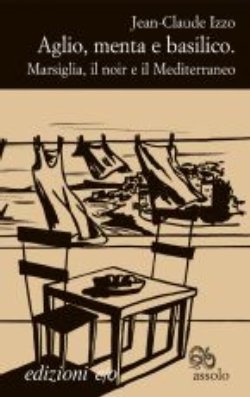
If you read French or Italian, Ile noire, Jazz al Nero and Andrea Fannini offer interesting discussions of Izzo. That last entry, a discussion of a book of Izzo's short writing called Aglio, menta e basilico – Marsiglia, il noir e il Mediterraneo, offers insight on the social and political concerns of Fabio Montale and the man who created him. And culinary concerns, too. The first part of the book's title means "garlic, mint and basil." Fabio Montale may be more melancholy in outlook than Andrea Camilleri's Salvo Montalbano or Manuel Vázquez Montalbán's Pepe Carvalho, but he eats just as well.

© Peter Rozovsky 2007

Technorati tags:

Labels: , , ,

Thursday, February 15, 2007

Mystery music

What kind of music does your favorite fictional detective listen to? What sounds course through the pages of your favorite crime fiction?

Sherlock Holmes liked to play the violin, even if Watson did not always enjoy listening. Thanks to technology and economics, today's protagonists are spared the effort of learning and practicing an instrument. They can listen to records, tapes and CDs, and I suppose younger fictional crime-solvers are hooking themselves up to their MP3 players even as we speak because their creator wants to set a mood or to reveal something about a character that only Tom Waits or Tupac or Nirvana can say.

Uriah at Crime Scraps notes that Ake Edwardson's Erik Winter likes jazz and asks: "will it be my kind of jazz, Armstrong, Basie, Hawkins, Spanier and Goodman or more modern stuff ?" I'm sure a toot of Ornette Coleman would not put Uriah off a novel he was otherwise enjoying, but his post did get me thinking about how an author uses music to build a fictional world.

Jean-Claude Izzo's Fabio Montale listens to music as hot, as rich, as spicy and as varied as his hometown of Marseilles. That works for me in part because I know some of the music Montale likes, I'm intrigued by the music I don't know, and in large part because his tastes are distinctive. And it's not just newer writers. Jonathan Latimer made sparing and effective use of radio music in his William Crane novels in the late 1930s.

Then there's Ian Rankin, whose detective, John Rebus, listens to the Rolling Stones, sometimes in books that share titles with Stones albums: Let it Bleed, Black and Blue, Beggars Banquet. I don't begrudge Rebus his love of the Stones, but their popularity is so widespread that a taste for their music is not unusual enough to serve as a distinctive character marker. Maybe that's supposed to be part of Rebus' everyman charm. It won't work for me until Rankin can tell me why Rebus' reaction to the Stones is different enough from yours or mine to hold my interest.

The same goes for Ken Bruen's protagonists. Rock and roll is so mainstream these days that it's tough for an author to use it as a mark of distinctiveness, despair or much of anything, really. It's as banal as using brand names to set the tone of a place and time.

N.B. I've had to amend my comment on Ken Bruen. He actually does some nice things with music in his books, and I've mentioned them in comments to this post. I'm still no big fan of the epigraphs from songs and crime novels that he uses as chapter headings. If I recall correctly, Bust, Bruen's hilarious collaboration with Jason Starr, even uses a quotation from another Starr novel as a chapter heading. That doesn't seem quite right, somehow. Of course, it doesn't have anything directly to do with music, either.

© Peter Rozovsky 2007

Technorati tags:


Labels: , , , ,

Friday, November 10, 2006

L'histoire du polar marseillais / crime fiction from Marseilles

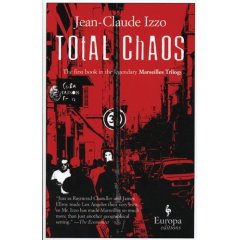
I've posted here, here and here about Total Chaos, the first novel in Jean-Claude Izzo's Marseilles trilogy. Two recent discoveries, plus the arrival of my copy of Chourmo, the second volume, brought me back to that atmospheric tale, at once downbeat and full of Izzo's love for Marseilles.

The Ile noire blog explores, in French, the early history of Marseillais crime fiction. That's a concept that we readers of international crime fiction ought to like. Ile noire is a bilingual site, mostly French with a bit of Corsican. I learned that bonavinuta means welcome and a dopu means later! or until the next time. The obvious similarities between the Corsican words and their Italian counterparts (other Corsican words are more like French) is a rich little lesson in language and history – and I owe it all to international crime fiction.

An Italian site reviews a collection of tales and other writing by Izzo that bears the delicious title of Aglio, menta e basilico – Marsiglia, il noir e il Mediterraneo (Garlic, mint and basil – Marseilles, noir and the Mediterranean). The sensual appeal of that title is beguiling, as are the reviewer's descriptions of how Izzo's detective protagonist Fabio Montale –"a Mediterranean man" – loves jazz, hip-hop, eating, drinking, gossiping for hours in bars ... What a life!

Izzo, reviewer Andrea Fannini concludes, is "a French, indeed, a Mediterranean poet."

© Peter Rozovsky 2006

Technorati tags:

Labels: , , , , ,

Sunday, October 22, 2006

No full review of "Total Chaos" yet, but ...

It's coming, it's coming, maybe. Circumstances will conspire to make my blogging spotty for the next week or so, and I don't even have my copy of Total Chaos handy for reference.

For now, though, I have one more comment relating to music. Jean-Claude Izzo seems to have had music very much on his mind as he wrote Total Chaos. This shows not just in the frequent invocations of music to set mood and define character, but also in a small aspect of the book's construction. The protagonist and two friends who figure prominently are of Spanish or Neapolitan stock. The milieu of the novel is 1990s Marseilles, which has new minorities, some African but mostly Arab. Throughout the novel, the protagonist/narrator, Fabio Montale, compares and contrasts the older immigrants with their newer counterparts. These observations ae commentaries on the main action, something like a secondary theme recurring in a symphony and responding to the main theme.

As in a symphony, the observations build to a climax. As Montale's world reels into total chaos (bodies pile up, killers and victims turn out to be connected in unexpected ways, and fascists of an especially evil kind turn up in high places — or dead), the comparison of poor white Italian and Spanish immigrants with poor dark-skinned Arabs intensifies into identification. In one of the novel's numerous flashbacks, Montale and friends comtemplate with grim amusement the situation of Spanish and Neapolitan immigrants to Marseilles. "What are we, after all?" one friend asks, to which the other responds "Arabs!" and all burst into laughter, the climax and the realization of all that had been implied first by comparison and then by identification.

And this may be the taking-off point for a post about politics in crime novels. Cheerio!

© Peter Rozovsky 2006

Labels: , , , , , , ,

Friday, October 20, 2006

Jean-Claude Izzo's "Total Chaos": Music and Poetry

I'm nearly through Total Chaos, the densely atmospheric and downbeat first novel in Jean-Claude Izzo's Marseilles trilogy.

A few notes before a full-scale comment in the next day or two:

1) Too many noirish writers these days use a protagonist's musical tastes as shorthand for his or her state of mind. I'm not sure when writers started doing this in a big way; maybe Ian Rankin's John Rebus popularized it, with his taste for the Rolling Stones. In any case, the device has become a cliche, and it can seem cheap. You know, the author is too lazy to write how his hero feels like a boozy piece of crap, so he types the words "Tom Waits" and feels that he's done his job. (I wonder if writers picked this up from the by-now stereotypical moody saxophone soundtrack of countless crime movies and TV shows.)

Two things set Izzo apart from this group. The first is that his Fabio Montale's musical tastes are better and more varied than those of most modern noir protagonists. He listens to Paco de Lucia and lots of Michel Petrucciani, for example. French singers. Italian singers. Other characters listen to Marseillais rap or to rai. This music is different enough that it serves as a real character marker and mood setter rather than just an easy label.

The second is a frequent poignance of presentation. Montale hears music coming from another room or from inside an apartment. Outside, he muses on the music and the person playing it, and on his separation from her. This, I think, contributes to the sense of wistfulness and fatalism that some have seen in the trilogy.

2) There's poetry here. Characters recite it, read it, talk about it, reminisce about it. The poetry is usually intense and romantic, and so is the effect. In only one scene does the poetry seem an affectation, because there is too little poetry, and too much talk about poetry. I felt torn from the novel's fictional world and plunked down in a lecture from Izzo about what he liked. When reading a novel, I care nothing for the author, everything for the characters.

© Peter Rozovsky 2006

Labels: , , , , , , ,

Monday, October 16, 2006

Marseilles Trilogy, part I

Two thoughts on the beginning of Total Chaos, the first novel in Jean-Claude Izzo's Marseilles trilogy (which also includes Chourmo and Solea):

1) I don't know what the weather is like in the opening chapters, but it feels like rain. Either like rain, or like relentless sun beating everything into silence.

2) Total Chaos has not been made into a movie, as far as I know, but, based on the novel's early pages, I imagine a film shot through with dissolves, sudden transitions and flashbacks to capture leaps of time and place -- a challenge, in other words, for a director who wants to keep a film watchable. On paper, on the other hand, these opening chapters are gorgeous.

P.S. The trilogy was the basis for a 2001 French television miniseries starring Alain Delon, that classy portrayer of gangsters in atmospheric settings.

© Peter Rozovsky 2006

Labels: , , , ,