Friday, August 17, 2007

Crime in an academic setting

I found out about this one only after the fact, but if I'd been in Ireland in June, I might have made my way to The Scene of the Crime: Setting in Modern Crime Fiction at the University of Limerick.

This academic conference drew scholars from Europe and North America to talk about setting in mysteries and, yes, one or two of the papers had goofy titles ("Bodyscape, or the Representation of the Body in C.S.I."). But there was plenty to interest serious readers of crime fiction. A paper in the "Unreal Places II" session was devoted to "Fred Vargas’s Mythical Sense of Place," for example, and another focused on "Murder in Swedish Arcadia: The Idyllic Setting in the Swedish Whodunit of the 1950s." Given the conference's location, it's no surprise Ken Bruen made it onto the program. He made it twice, in fact, in "Scene and Heard: Ken Bruen’s Defective Detective" "American Skin, Irish Masks: Ken Bruen’s Postmodernism."

I'll save the conference's program as a shopping list for writers whose work I'd heard of but not read -- Driss Chraïbi and Didier Daeninckx, to mention two -- and I'll look into others who were the subjects of intriguing-sounding papers. The organizers appeared to take crime fiction the way it ought to be taken if it is to be the subject of a conference: seriously, but without going over the top. The good people who put the event together billed it as the second interdisciplinary crime fiction conference of the Atlantic University Alliance, and if they'll allow a non-academic into their midst, I might attend the third.

© Peter Rozovsky 2007

Labels: ,

Saturday, July 28, 2007

Great first lines in crime fiction

Dave's Fiction Warehouse holds forth on opening lines, including a good one from his upcoming story in Ellery Queen Mystery Magazine. Dave was inspired by this list from the American Book Review, headed — no surprise — by the first words of Moby Dick.

But what about crime stories? What opening line (or paragraph) gave you that frisson of excitement that made you keep reading? My candidate for the Moby Dick of crime-story first lines, the opening that everyone knows, is this, from Raymond Chandler's "Red Wind":

There was a desert wind blowing that night. It was one of those hot, dry Santa Anas that come down through the mountain passes and curl your hair and make your nerves jump and your skin itch. On nights like that every booze party ends in a fight. Meek little wives feel the edge of the carving knife and study their husbands' necks. Anything can happen. You can even get a full glass of beer at a cocktail lounge.
Here's the opener of the book I'm reading now, Ken Bruen's Ammunition: "Brant was on his third whisky, knocking it back like a good un."

And now, readers, you have the floor. What are your favorite crime-story opening lines?

© Peter Rozovsky 2007

Labels: , , ,

Thursday, July 19, 2007

And one more thing ...

When I posted about tributes from one crime-fiction author to another, I forgot this example, from Colin Cotterill's The Coroner's Lunch, which I was reading at the time:

"During his stay in Paris decades before, he'd taken his delight in the weekly serializations of one Monsieur Sim in the l'Oeuvre newspaper ... Siri had been able to solve most of the mysteries long before the inspector had a handle on them."
And, recalls Cotterill's protagonist, the proud Siri Paiboun, he solved the crimes without the benefit of the inspector's pipe. Back in Laos, Siri is delighted to find that Monsieur Sim now writes under his full name of Georges Simenon and that his books have filtered from Vietnam into Laos.

Cotterill thus offers a more elaborate tribute than most, spinning it out into an anecdote and giving his readers not just the information that Siri (and, presumably, Cotterill, too) reads Simenon's Maigret stories, but the historical nugget that Simenon once wrote under the name of Sim, and a plausible example of his phenomenal worldwide popularity.

All this gives me the opportunity to ask you another question, dear readers. How do you feel about such references and tributes? Do they add to the story's interest? One the one hand, if you and I read detective stories, there is no reason why a fictional detective should not do the same thing. On the other, this can serve as a mischievous (or intrusive) reminder that when you read a story, you are not entering a real world, you are just reading a story.

OK, I'm done being ponderous. Now it's your turn. Do your favorite fictional detectives read detective stories? How do you feel about this?

© Peter Rozovsky 2007

Labels: , , , , ,

Sunday, November 19, 2006

Grab your Italian dictionaries ...

... and get ready to read Il Falcone Maltese, an Italian magazine about crime and noir fiction, movies and television. The on-line version contains introductions to a wide variety of articles, news, interviews and reviews on crime and mystery Italian and foreign, past and present, current and classic: Gianrico Carofiglio and Orhan Pamuk, to name two in the current issue. For full texts of all the articles, you'll have to subscribe or visit Italy.

© Peter Rozovsky 2006

Technorati tags:

Labels: , , , , ,

Saturday, November 18, 2006

New Australian crime fiction

Crime Down Under's What's New section offers capsule descriptions of new Australian crime fiction -- a good holiday shopping guide.

Technorati tags:

Labels: , ,

Monday, November 13, 2006

Good Reading from Australia

The Australian Crime Fiction Forum has a link to Good Reading -- the Magazine for Book Lovers, published in print and online versions -- a "great magazine and a useful site for those interested in the Australian book marketplace," according to Karen, who maintains the Australian Crime Fiction site.

A quick glance at Good Reading's contents and archives turned up a long list that included Robert Wilson on why he sets novels in Portugal and Spain, and a series about famous characters that included selections on Dr. Watson and Modesty Blaise. That's an intriguing mix and one that looks well worth exploring.

Technorati tags:

Labels: , , , ,

Friday, November 10, 2006

L'histoire du polar marseillais / crime fiction from Marseilles

I've posted here, here and here about Total Chaos, the first novel in Jean-Claude Izzo's Marseilles trilogy. Two recent discoveries, plus the arrival of my copy of Chourmo, the second volume, brought me back to that atmospheric tale, at once downbeat and full of Izzo's love for Marseilles.

The Ile noire blog explores, in French, the early history of Marseillais crime fiction. That's a concept that we readers of international crime fiction ought to like. Ile noire is a bilingual site, mostly French with a bit of Corsican. I learned that bonavinuta means welcome and a dopu means later! or until the next time. The obvious similarities between the Corsican words and their Italian counterparts (other Corsican words are more like French) is a rich little lesson in language and history – and I owe it all to international crime fiction.

An Italian site reviews a collection of tales and other writing by Izzo that bears the delicious title of Aglio, menta e basilico – Marsiglia, il noir e il Mediterraneo (Garlic, mint and basil – Marseilles, noir and the Mediterranean). The sensual appeal of that title is beguiling, as are the reviewer's descriptions of how Izzo's detective protagonist Fabio Montale –"a Mediterranean man" – loves jazz, hip-hop, eating, drinking, gossiping for hours in bars ... What a life!

Izzo, reviewer Andrea Fannini concludes, is "a French, indeed, a Mediterranean poet."

© Peter Rozovsky 2006

Technorati tags:

Labels: , , , , ,

A fine source for news and reviews of crime fiction

The Euro Crime Web site's news section has links to news, views, interviews and lots and lots of reviews from newspapers in Europe and North America. It looks like a great place to browse, to find new books and authors, and to find gifts as that special time of year approaches.

Labels: , , , , ,

Saturday, November 04, 2006

An arresting Spanish site

Detectives literarios is an interesting and eclectic site for those who read Spanish (and what better way to practice a language than reading about detective fiction?)

Among the detectives you'll meet in the introduction are Marco Didio Falco (Marcus Didius Falco, to those of us who read in Latin or English), Salvo Montalbano, Hercule Poirot, Perry Mason, Philip Marlowe, Joseph Rouletabille, Lew Archer, Philo Vance, Sherlock Holmes, Kurt Wallander, Guido Brunetti, Kostas Jaritos, Nastia Kaménskaya, Michael Ohayon, Harry Bosch, John Rebus "y tantos otros." Subjects of recent posts include Chester Himes, Patricia Highsmith and Yasmina Khadra. That's a nice list.

© Peter Rozovsky 2006

Labels: , , , ,

Friday, November 03, 2006

More from Bitter Lemon

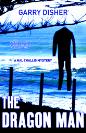
I, too, have now received notice of Bitter Lemon Press' updated Web site. As I noted when I first saw the new site, the latest catalogue contains a first for this fine imprint: two novels whose original language is English, Garry Disher's The Dragon Man (May 2007 in the United Kingdom) and D.B., by Elwood Reid (November 2006 in the U.K.).

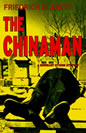
The site also brings the good news of another novel from the great Friedrich Glauser: The Chinaman, with publication dates of February 2007 in the U.K. and November 2007 in the U.S. Like the first three Glauser titles published by Bitter Lemon, this is translated by Mike Mitchell. Long before I ever thought much about the job translators do, I noticed an interesting challenge that Mitchell must have faced: how to convey the speech of characters who slip in and out of various German dialects. Here's what Mitchell had to say on the subject in an excellent article on translating crime fiction that I cited a few weeks back:

"Thumbprint ... is set in Switzerland and the language is an important part of the setting. (Whether Swiss is a 'dialect' or not is something I won't go into here.) Mostly the characters speak 'normal' colloquial German with the odd Swiss word or phrase. Sometimes they speak broad Swiss: this is impossible to copy, if only because there is no English 'dialect' which has a status and usage comparable to Swiss, not even Scots. ...

Glauser tells us his detective, Studer, normally speaks the German of Bern, though as I said above, what appears on the page is mostly ordinary colloquial German; but sometimes, when he's angry, Studer speaks 'formal' (close to written) German. The author points this out, as a way of indicating his mood. Another character speaks a mixture of Swiss and formal German which doesn't sound quite authentic and, again, Glauser points this out. I've copied this commenting on the characters' language, doing it in places where the author doesn't, where it seemed to me that the particular type of language used reflected mood or feeling. I felt I could do this because the author's 'voice' makes that kind of comment. Beyond that, I have kept a few Swiss words and phrases, where the meaning is clear enough, in order to try and emphasise the Swiss background (e.g. 'Chabis' = cabbage = nonsense)."

© Peter Rozovsky 2006

Technorati tags:

Labels: , , , , ,

A source for short stories.

Those hard-working people at Crime Down Under have started an online crime-fiction magazine. The first issue of The Outpost offers six short stories by Australian and New Zealand writers, and plans are to publish quarterly.

Labels: , , ,

Wednesday, October 18, 2006

Teaching crime fiction in schools?

They do it in France. An article at crimeculure.com on the history of crime fiction in France offers this:

Its cultural value can be judged by the fact that the genre is not only taught in primary schools using guided anthologies with short extracts from a wide variety of French and other authors. But also from November 2003 to the end of February 2004, there was an exhibition targeted specifically at young readers at the specialist crime-fiction library in Paris (Bilipo) ... The accompanying book, co-produced by the Parisian library services and La Joie par les Livres, a Ministry of Culture and Communication organisation, contains interesting articles and suggestions for further reading for both children and adults.

Labels: , ,