Tuesday, March 13, 2007

A piece of prescience from Jean-Claude Izzo

Remember the French riots of 2005? Here's a passage from Chourmo, the second volume in Jean-Claude Izzo's Marseilles trilogy:

"[Pertin] wasn't directly responsible for Serge's death. Or Pavie's. But he was the symbol of a police force I hated. A police force in which political ideas and personal ambitions were placed above the values of the Republic, like justice and equality. ... If the suburbs exploded one day, it would be down to them. Their contempt. Their xenophobia. Their hate. And their shabby little schemes to become, one day, `a great cop.'"

Izzo published those words in 1996.

© Peter Rozovsky 2007

Technorati tags:

Labels: , , ,

Friday, March 09, 2007

Romance and violence

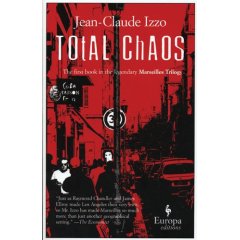
Where music, poetry, memories and the Mediterranean go, romance is sure to follow. That was true in Total Chaos, the first novel in Jean-Claude Izzo's Marseilles trilogy, and it's even more the case in Chourmo, the second book.

Just six short chapters in, the protagonist, Fabio Montale, has yearned for lost loves, lost friends, lost opportunities, even for the tolerable aspects of his lost job as a police officer. These chapters are melancholy and gorgeous and full also of Izzo's sharp and sometimes unexpected political observations. The melancholy is enhanced by the reader's knowledge that the lost cousin whom Montale searches for has already been killed.

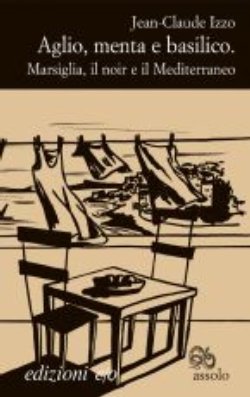
If you read French or Italian, Ile noire, Jazz al Nero and Andrea Fannini offer interesting discussions of Izzo. That last entry, a discussion of a book of Izzo's short writing called Aglio, menta e basilico – Marsiglia, il noir e il Mediterraneo, offers insight on the social and political concerns of Fabio Montale and the man who created him. And culinary concerns, too. The first part of the book's title means "garlic, mint and basil." Fabio Montale may be more melancholy in outlook than Andrea Camilleri's Salvo Montalbano or Manuel Vázquez Montalbán's Pepe Carvalho, but he eats just as well.

© Peter Rozovsky 2007

Technorati tags:

Labels: , , ,

Thursday, February 15, 2007

Mystery music

What kind of music does your favorite fictional detective listen to? What sounds course through the pages of your favorite crime fiction?

Sherlock Holmes liked to play the violin, even if Watson did not always enjoy listening. Thanks to technology and economics, today's protagonists are spared the effort of learning and practicing an instrument. They can listen to records, tapes and CDs, and I suppose younger fictional crime-solvers are hooking themselves up to their MP3 players even as we speak because their creator wants to set a mood or to reveal something about a character that only Tom Waits or Tupac or Nirvana can say.

Uriah at Crime Scraps notes that Ake Edwardson's Erik Winter likes jazz and asks: "will it be my kind of jazz, Armstrong, Basie, Hawkins, Spanier and Goodman or more modern stuff ?" I'm sure a toot of Ornette Coleman would not put Uriah off a novel he was otherwise enjoying, but his post did get me thinking about how an author uses music to build a fictional world.

Jean-Claude Izzo's Fabio Montale listens to music as hot, as rich, as spicy and as varied as his hometown of Marseilles. That works for me in part because I know some of the music Montale likes, I'm intrigued by the music I don't know, and in large part because his tastes are distinctive. And it's not just newer writers. Jonathan Latimer made sparing and effective use of radio music in his William Crane novels in the late 1930s.

Then there's Ian Rankin, whose detective, John Rebus, listens to the Rolling Stones, sometimes in books that share titles with Stones albums: Let it Bleed, Black and Blue, Beggars Banquet. I don't begrudge Rebus his love of the Stones, but their popularity is so widespread that a taste for their music is not unusual enough to serve as a distinctive character marker. Maybe that's supposed to be part of Rebus' everyman charm. It won't work for me until Rankin can tell me why Rebus' reaction to the Stones is different enough from yours or mine to hold my interest.

The same goes for Ken Bruen's protagonists. Rock and roll is so mainstream these days that it's tough for an author to use it as a mark of distinctiveness, despair or much of anything, really. It's as banal as using brand names to set the tone of a place and time.

N.B. I've had to amend my comment on Ken Bruen. He actually does some nice things with music in his books, and I've mentioned them in comments to this post. I'm still no big fan of the epigraphs from songs and crime novels that he uses as chapter headings. If I recall correctly, Bust, Bruen's hilarious collaboration with Jason Starr, even uses a quotation from another Starr novel as a chapter heading. That doesn't seem quite right, somehow. Of course, it doesn't have anything directly to do with music, either.

© Peter Rozovsky 2007

Technorati tags:


Labels: , , , ,

Friday, November 10, 2006

L'histoire du polar marseillais / crime fiction from Marseilles

I've posted here, here and here about Total Chaos, the first novel in Jean-Claude Izzo's Marseilles trilogy. Two recent discoveries, plus the arrival of my copy of Chourmo, the second volume, brought me back to that atmospheric tale, at once downbeat and full of Izzo's love for Marseilles.

The Ile noire blog explores, in French, the early history of Marseillais crime fiction. That's a concept that we readers of international crime fiction ought to like. Ile noire is a bilingual site, mostly French with a bit of Corsican. I learned that bonavinuta means welcome and a dopu means later! or until the next time. The obvious similarities between the Corsican words and their Italian counterparts (other Corsican words are more like French) is a rich little lesson in language and history – and I owe it all to international crime fiction.

An Italian site reviews a collection of tales and other writing by Izzo that bears the delicious title of Aglio, menta e basilico – Marsiglia, il noir e il Mediterraneo (Garlic, mint and basil – Marseilles, noir and the Mediterranean). The sensual appeal of that title is beguiling, as are the reviewer's descriptions of how Izzo's detective protagonist Fabio Montale –"a Mediterranean man" – loves jazz, hip-hop, eating, drinking, gossiping for hours in bars ... What a life!

Izzo, reviewer Andrea Fannini concludes, is "a French, indeed, a Mediterranean poet."

© Peter Rozovsky 2006

Technorati tags:

Labels: , , , , ,

Sunday, October 22, 2006

No full review of "Total Chaos" yet, but ...

It's coming, it's coming, maybe. Circumstances will conspire to make my blogging spotty for the next week or so, and I don't even have my copy of Total Chaos handy for reference.

For now, though, I have one more comment relating to music. Jean-Claude Izzo seems to have had music very much on his mind as he wrote Total Chaos. This shows not just in the frequent invocations of music to set mood and define character, but also in a small aspect of the book's construction. The protagonist and two friends who figure prominently are of Spanish or Neapolitan stock. The milieu of the novel is 1990s Marseilles, which has new minorities, some African but mostly Arab. Throughout the novel, the protagonist/narrator, Fabio Montale, compares and contrasts the older immigrants with their newer counterparts. These observations ae commentaries on the main action, something like a secondary theme recurring in a symphony and responding to the main theme.

As in a symphony, the observations build to a climax. As Montale's world reels into total chaos (bodies pile up, killers and victims turn out to be connected in unexpected ways, and fascists of an especially evil kind turn up in high places — or dead), the comparison of poor white Italian and Spanish immigrants with poor dark-skinned Arabs intensifies into identification. In one of the novel's numerous flashbacks, Montale and friends comtemplate with grim amusement the situation of Spanish and Neapolitan immigrants to Marseilles. "What are we, after all?" one friend asks, to which the other responds "Arabs!" and all burst into laughter, the climax and the realization of all that had been implied first by comparison and then by identification.

And this may be the taking-off point for a post about politics in crime novels. Cheerio!

© Peter Rozovsky 2006

Labels: , , , , , , ,

Friday, October 20, 2006

Jean-Claude Izzo's "Total Chaos": Music and Poetry

I'm nearly through Total Chaos, the densely atmospheric and downbeat first novel in Jean-Claude Izzo's Marseilles trilogy.

A few notes before a full-scale comment in the next day or two:

1) Too many noirish writers these days use a protagonist's musical tastes as shorthand for his or her state of mind. I'm not sure when writers started doing this in a big way; maybe Ian Rankin's John Rebus popularized it, with his taste for the Rolling Stones. In any case, the device has become a cliche, and it can seem cheap. You know, the author is too lazy to write how his hero feels like a boozy piece of crap, so he types the words "Tom Waits" and feels that he's done his job. (I wonder if writers picked this up from the by-now stereotypical moody saxophone soundtrack of countless crime movies and TV shows.)

Two things set Izzo apart from this group. The first is that his Fabio Montale's musical tastes are better and more varied than those of most modern noir protagonists. He listens to Paco de Lucia and lots of Michel Petrucciani, for example. French singers. Italian singers. Other characters listen to Marseillais rap or to rai. This music is different enough that it serves as a real character marker and mood setter rather than just an easy label.

The second is a frequent poignance of presentation. Montale hears music coming from another room or from inside an apartment. Outside, he muses on the music and the person playing it, and on his separation from her. This, I think, contributes to the sense of wistfulness and fatalism that some have seen in the trilogy.

2) There's poetry here. Characters recite it, read it, talk about it, reminisce about it. The poetry is usually intense and romantic, and so is the effect. In only one scene does the poetry seem an affectation, because there is too little poetry, and too much talk about poetry. I felt torn from the novel's fictional world and plunked down in a lecture from Izzo about what he liked. When reading a novel, I care nothing for the author, everything for the characters.

© Peter Rozovsky 2006

Labels: , , , , , , ,

Monday, October 16, 2006

Marseilles Trilogy, part I

Two thoughts on the beginning of Total Chaos, the first novel in Jean-Claude Izzo's Marseilles trilogy (which also includes Chourmo and Solea):

1) I don't know what the weather is like in the opening chapters, but it feels like rain. Either like rain, or like relentless sun beating everything into silence.

2) Total Chaos has not been made into a movie, as far as I know, but, based on the novel's early pages, I imagine a film shot through with dissolves, sudden transitions and flashbacks to capture leaps of time and place -- a challenge, in other words, for a director who wants to keep a film watchable. On paper, on the other hand, these opening chapters are gorgeous.

P.S. The trilogy was the basis for a 2001 French television miniseries starring Alain Delon, that classy portrayer of gangsters in atmospheric settings.

© Peter Rozovsky 2006

Labels: , , , ,