Tuesday, August 04, 2015

Douglas Sanderson: World's toughest sort-of Canadian

Douglas Sanderson is said to have been inspired by Mickey Spillane, but his 1959 novel Cry Wolfram reminds me more of Peter Rabe or Patricia Highsmith.

Like Rabe's The Box and Highsmith's The Tremor of Forgery, Cry Wolfram is a story of foreigners at loose ends in a warm country just as likely to bite them in the ass as it is to give them a suntan. (In this case the foreigners are in Spain chasing down a lucrative concession to mine wolfram — also known as tungsten — hence the book’s delicious pun of a title.)

Like Highsmith and Rabe, Sanderson offers a convincing portrait of a setting outside his own country. Scenes of bull-fighting, religious festivals, and the eerie calm of a small town at night, and of how the latter can scare the bejeebers out of a visitor, are beautifully rendered. While these scenes may not want to make you visit Sanderson's Spain, they will surely give you a vivid picture of what to expect if you do

Cry Wolfram also reminds me a bit of Charles Williams. Like Williams and Rabe at their best, Sanderson could write gracefully and artfully enough to satisfy the demands of a “literary” novel without, however, sacrificing suspense and tough-guy credibility. (Highsmith, of course, was so good as not to need mentioning in this respect.) In only one paragraph — one sentence, really — does Cry Wolfram come even close to literary preciousness. Disregard those eight words, if you like, and enjoy the rest of the book.

(Sanderson came by his knowledge of Spain honestly. Born in England, he moved to Montreal as a young man, then hit the road, settling eventually in Spain, where he married and had a son, according to the good folks at Stark House Press, who publish Cry Wolfram in a twofer edition with Sanderson’s Night of the Horns.)

© Peter Rozovsky 2015

Labels: , , , , ,

Sunday, March 23, 2014

C.V. Wedgwood's Thirty Years War: More than just three guys in a shit pile


Until Saturday evening, I knew little about the Thirty Years' War beyond the picturesque name of an incident that precipitated it (above).

But the war, it turns out, was about much more than three Catholic Habsburg envoys thrown from a window by angry Bohemian Protestants, surviving unhurt only because a dung pile cushioned their fall.

In the first hundred or so pages of C.V. Wedgwood's Thirty Years War (that punctuation in the title is per Wedgwood, or at least per the NYRB Classics edition of the book. In addition to pitting Habsburg and Bourbon, Catholic and Protestant, Lutheran and Calvinist, and France and Spain, a little-known dispute that survives to this day pits supporters of the possessive apostrophe in the war's name against those who prefer to go without), I have learned much about why Germany was such a mess and about how Lutheranism forged ahead. Wedgwood was a brilliant writer and historian of the good, old-fashioned kind, and for this post I'll highlight some of the larger points she makes.

The first is her acknowledgement in an introduction written eighteen years after the book first appeared that "History reflects the period in which it was written as much as any other branch of literature." In her case, that period was the 1930s, marked by economic depression and rising international tensions.

Look at that passage for a moment.  How many historians today would think of what they do, of the product of their research, as literature?  Wasn't history better off, or at least a hell of a lot more readable, before it became a social science?  Then consider Wedgwood's remarks that her own
"knowledge, sometimes intimate, sometimes more distant, of conditions in depressed and derelict areas, of the sufferings of the unwanted and uprooted—the two million unemployed at home, the Jewish and liberal fugitives from Germany. Preoccupation with contemporary distress made the plight of the hungry and homeless, the discouraged and the desolate in the Thirty Years War exceptionally vivid to me."
Sounds a bit like A People's History of Central and Western Europe, doesn't it? But then you get to something like this, from the first chapter:
"The faulty transmission of news excluded public opinion from any dominant part in politics.  ... The great majority of the people remained powerless, ignorant, and indifferent. The public acts and private character of individual statesmen thus assumed disproportionate significance, and dynastic ambitions governed the diplomatic relations of Europe." 
I suspect that these days casual thinkers about history will regard political history and social history as opposites, the "Great Men" theory and "people's" history as irreconcilable.  Not Wedgwood.

But here's the most remarkable thing about The Thirty Years War: Wedgwood was not yet thirty years old when she wrote the book.   Now, I'll see you later. I have some reading to do.

© Peter Rozovsky 2014

Labels: , , , , , , ,

Sunday, October 20, 2013

Gitana, or a wallow in Dominic Martell's world

was listening to Camarón de la Isla when I received Sam Reaves' e-mail about the novels he publishes under the name Dominic Martell.  The coincidence was a happy one; the novels are set in Barcelona, the third of the three is called Gitana, and Camarón was a Gitano (a Spanish Roma, or Gypsy) and one of the greatest of all flamenco singers.

So I began with Gitana, and, sure enough, Camarón gets a mention early on, and so does the great Carmen Linares. Lots of crime novels are suffused with atmosphere, but  Gitana is almost entirely atmosphere through its opening pages — not a bad thing if the setting is Barcelona and the atmosphere is in large measure music.

Camarón de la Isla (Hear and see Camarón sing 
"Soy Gitano")
The first two chapters—and Martell works lots of short scenes into a chapter—only reveal gradually that one of the characters, Pascual Rose, has a past. For most of the opening chapters, the characters hang around bars and clubs and talk about their city or about breaking away to flamenco's big time in Madrid or Seville. Even the opening scene, in which Pascual narrowly escapes a severe beating that leaves the assailants much the worse for their efforts, comes off as just one more incident in the flow of incident and conversation:
"Hours of proximity, long stretches of sociability in agreeable company, shared tedium and fatigue."
© Peter Rozovsky 2013

Labels: , , , , , , ,

Tuesday, August 07, 2012

Manuel Vázquez Montalbán and the power of "but"

Manuel Vázquez Montalbán is a leftist I could have done business with because, while I don't quite share the late Barcelona crime writer's political commitments, I like to think I share his analytical eye for bullshit.

His 1988 novel Off Side (translated into English in 1996) does not just heap easy insults on developers and politicians, it analyzes its targets, and if that sounds polemical and didactic, maybe it is, but it can be fun. Furthermore, Vázquez Montalbán does not just excoriate moneymakers, he expresses considerable sympathy for the people (and, in this case, a lower-division soccer team) threatened by development ahead of the 1992 Barcelona Olympics.

The sections that ring truest with me are those that expose rhetoric that triangulates, that tries to crush its opposition with kindness and sweet reason, that pretends to understand the other guy's point of view while plotting to take his land, that disingenuously identifies its own interests with the public good. Here's the patrician chairman of the the FC Barcelona soccer team addressing the College of Lawyers.:
"We must not let ourselves be carried away by speculative adventures, but at the same time we must not let ourselves be paralysed by the kind of unimaginative conservatism which on occasion dominates public policy-making in the guise of progressive, left-wing thinking."
The key word in that eminently reasonable-sounding bit of speech making is, of course, but.

For those worried that the book is nothing but a tendentious political screed, know that Vázquez Montalbán and his protagonist, Pepe Carvalho, are just as hard on political correctness as they are on disingenuous neoliberalism:
"`Some people might think you're getting old.'

"`People don't know the meaning of the word nowadays. The only people who know what the word means are people who are old already, and I don't feel that I'm old yet. Imagine it! They've even succeeded in disappearing the word out of the language. These days they talk about `senior citizens.' It reminds me of the years under Franco, when workers had to be called `producers.' To be a `worker' was politically obscene and dangerous. These days, to be `old' is biologically obscene and dangerous."
Since one is vastly more likely to read about "senior citizens of either gender" than "old people of either sex" in my country and my newspaper, I say olé to Pepe Carvalho and Manuel Vázquez Montalbán.

© Peter Rozovsky 2012

Labels: , ,

Saturday, July 28, 2012

Olympic fact, fiction, and crime

"Even before the 2012 Games formally opened Friday night, east London, an area with some of the highest unemployment and crime rates in the country, had been visibly transformed by the world’s biggest sporting event. More than $14 billion has been poured into the London Games, for building Olympic facilities, upgrading public transportation and scrubbing the high streets near venues, the government says. The new shopping mall alone has brought about 8,000 jobs."
New York Times News Service
"(H)e went looking for a taxi in paseo Maratimo, a street seemingly frozen in time and place as it waited for the extension which would link it to the Olympic Village. In the distance, the houses that had been demolished for the construction of the Olympic sports facilities looked more like a set for a film about the bombing of Dresden, The new city would no longer feel like the city he knew ..."
Manuel Vázquez Montalbán, Off Side
The Times strikes a note of authenticity for its American readers, calling main streets high streets. More interesting is that the most trenchant of its responses from the Other Side of the Story comes not from an activist or area resident or member of a leftist think tank, but rather from Colin Ellis, senior vice president for credit policy at Moody’s Investor Services. “Looking at the big picture," says Ellis, “we think that corporate sponsors will benefit most. The Olympics are unlikely to provide a substantial economic boost.”

I wonder

a) whether Mr. Ellis would have been brave enough to utter such a prediction seven years ago, when London was awarded the Olympics,

 and

b) what Vázquez Montalbán, that man of the left, would have thought of such an utterance from an executive of “an essential component of the global capital markets.”
***
Here's a previous Detectives Beyond Borders post that touches on the London Olympics. And here's a post about Shane Maloney's novel Nice Try, set during Melbourne's failed bid for the 1996 Olympics. What other Olympics-related crime fiction can you think of?

© Peter Rozovsky 2012

Labels: , , , , , ,

Sunday, July 22, 2012

Political football: Manuel Vázquez Montalbán and sports mysteries

When FC Barcelona's Jordi Alba scored the second goal in Spain's demolition of Italy at the Euro 2012 soccer championships earlier this month, and Andrés Iniesta, who also plays for Barcelona, was named the tournament's best player, Manuel Vázquez Montalbán's friends, relatives, and readers must have smiled.

The late Barcelona-born crime writer was a huge fan of the soccer team, so huge that the FC Barcelona Foundation has sponsored a journalism award in his name since 2004. (Crime fiction readers may be more impressed that Andrea Camilleri named his protagonist Salvo Montalbano in homage to Vázquez Montalbán, possibly for the Spanish author's love of food as well as for his politics.)

Off Side, a 1989 novel first translated into English in 2000 and now reissued by Melville House, has protagonist Pepe Carvalho called in to protect FC Barcelona's newly signed English center forward against a death threat. (That probably dates the book because these days, English football is long on money but apparently short on world-class home-grown players. Top continental footballers are likelier to sign with English clubs than vice versa.)

Vázquez Montalbán was a sharp observer of the high and the low, and my favorite bit so far is of the high, namely of the Barcelona team's chairman at the news conference where the English star's signing is announced:
"He had been on the point of becoming, variously, a minister in the Spanish government, a councillor in the autonomous government of Catalonia, and mayor of Barcelona. At sixty years of age he had suddenly discovered tiredness, and a feat that this tiredness would cause him to disappear from the public stage that he had occupied continuously ever since he had become the great white hope of the progressive business community under Franco."
***
While commuting home to my copy of Off Side, I browsed Murder in the Raw (also published as Ring Around the Rosa (1955) by William Campbell Gault, which begins thus:
"THERE IS AN OLD GRIDIRON WHEEZE that states a guard is only a fullback with his brains knocked out. I have met some rather bright guards and some extremely stupid fullbacks, but what is a fact measured against the generality? I’d played a few years of guard, myself, the more prominent years with the Rams and made a lot of friends in Los Angeles. So it figured that when the boys began to clobber me, Los Angeles was the logical place to open up a business."
Since fate has me reading about football on both sides of the Atlantic, I'll ask what your favorite crime novels set in the world of sports are. That may be tricky, at least for readers of American crime fiction. Sports was once a popular category of pulp fiction, alongside crime, military, romance, and adventure, but no longer. So, your alternate question: When did sports lose favor as a crime-fiction category, and why?

© Peter Rozovsky 2012

Labels: , , , , , , , , ,

Friday, May 07, 2010

More sketches of Spain: P.J. Brooke on Spanish crime fiction, Part II


P.J. Brooke is the husband-and-wife team of Philip J. O’Brien and Jane Brooke. A Darker Night, their second novel featuring Sub-Inspector Max Romero, is due from Soho/Constable this summer. Part II of their survey of Spanish crime fiction for Detectives Beyond Borders takes in well-known names, prize winners, regional writers and foreign authors who set their work in Spain. (Read Part I here.)
===========================

Problems of identity play an important role. The fiercely independent regions of Catalunya, the Basque country and Galicia have produced crime novels first written in local languages: Itxaro Borda’s in the Basque language and Carlos G. Reigosa’s in Galician. Women novelists have, for the first time, also come to the fore. Borda’s investigator is (good heavens) lesbian.

Since the 1990s, Arturo Pérez-Reverte has dominated the Spanish mystery scene. The Dumas Club is a Gothic tale about rare books that strays into Dan Brown territory but does it far better. It was filmed by Roman Polanski as The Ninth Gate with Johnny Depp. The Flanders Panel, The Fencing Master, The Seville Communion and The Queen of the South are all strong, meticulously researched, historically based tales, a little ornate at times, but never boring.

Liberty vs. social responsibility
Lorenzo Silva, one of Spain’s most successful crime writers, has produced two very modern Guardia Civil officers in the Basque Ruben Bevilacqua and his assistant, the Mallorcan Virginia Chamorra, both of whom grapple with conflicts between individual liberty and social responsibility in a democratic Spain and reflect changing perceptions of cops. Unfortunately his novels are not translated into English.

Juan José Millás parodies the detective form to explore the relations between appearance and reality. And Eugenio FuentesDepths of the Forest, Blood of the Angels and At Close Quarters revert to the more traditional psychological investigation.

Carlos Ruiz Zafón’s novels deserve special mention. The Shadow of the Wind, set in Barcelona in 1945, explores the psychological pressures of fascism. and censorship. A thriller, the book isn’t perfect, but in translation, extremely popular.

At the more literary end of the scale, José Carlos Somoza won the 2002 Crime Writers Association Gold Dagger for The Athenian Murders, a re-creation of a deeply strange but utterly believable ancient Athens. Javier Marías won the Dublin IMPAC award for A Heart so White. It’s a thriller, but slow and subtle, unravelling how a young translator is drawn into a mystery in his own family.

Foreign crime writers in Spain
After years of foreign tourists, Spain is now coming into its own for foreign crime writers. American Rebecca Pawel’s series is set immediately after the Civil War. Her Lieutenant Carlos Alonzo y León comes from one of the families that did well out of the war. Robert Wilson ’s Inspector Falcón explores modern Seville, while our own Inspector Max Romero uncovers both the beauty and the dark side of a cosmopolitan Granada. Others are sure to follow.

Spanish crime novelists grapple mostly with Spain as it is, its problems of social mobility, migration and dislocation, endemic corruption at local, regional and national levels, the economic boom and now the bust, new immigrants crossing the narrow straits that separate Spain from Africa and flying in from Latin America, the drugs and people-trafficking. Spain inclines more to the American hard-boiled social criticism tradition than to the English whodunit and is the better for that.
===========================

Labels: , , ,

Wednesday, May 05, 2010

War, crime and politics: P.J. Brooke looks at Spanish crime fiction

===========
"Only after Franco’s death in 1975 did mystery novels come in from the cold, when writers used them to ask tough questions about Spanish society and question state-sponsored police procedures."
===========

P.J. Brooke is the husband-and-wife team of Philip J. O’Brien and Jane Brooke. They divide their time between Scotland and Granada. Their second novel featuring Sub-Inspector Max Romero, A Darker Night, is due from Soho/Constable this summer. In Part I of a two-part survey, they look at Spanish crime fiction from its beginnings until its liberation, with the death of Francisco Franco in 1975. (Read Part II of P.J. Brooke's survey of Spanish crime fiction here.)
======================
Medieval Spain was Jewish, Christian and Muslim, a culturally diverse, vibrant patchwork of Muslim and Christian principalities.

But in 1492, the Catholic kings defeated the last Muslim kingdom, and Columbus discovered the Americas. Los Reyes Catolicos celebrated by expelling Jews who did not convert to Christianity, and later, the Muslims. Church, crown and military created a repressive Catholic state that lasted, almost without let-up, until the death of General Francisco Franco in 1975. Spain was not the easiest place to be a writer.

Despite civil wars, censorship and a small reading public, some good novels were produced in nineteenth-century Spain. In 1853, 13 years after Edgar Allan Poe invented the genre, Pedro Antonio de Alarcón wrote Spain’s first mystery, The Nail and other Tales of Mystery and Crime. Translations of the Sherlock Holmes stories led to local imitations, but the mystery novel never really caught on, and Alarcón, Peréz Galdós and their contemporaries were more influenced by Sir Walter Scott, Dickens and Balzac than by Wilkie Collins.


Civil War turned back the clock
The Spanish Civil War of 1936-1939 turned the clock back as writers went into exile. In the 35 years of Franco’s dictatorship that followed, Spain was isolated from Europe and North America. Mysteries were published but heavily censored, and, of course, they were conventional police procedurals.

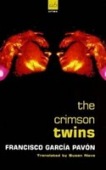
Francisco García Pavon wrote novels featuring local Police Chief Manuel Gonzalez “Plinio,” and his Dr. Watson, the veterinarian Don Lotario. The Plinio novels, set in a Spanish provincial town, were very popular and were made into a TV series. But they are mild in a Miss Marple way, where Franco’s cops were brutal and corrupt. Only after Franco’s death in 1975 did mystery novels come in from the cold, when writers used them to ask tough questions about Spanish society and question state-sponsored police procedures.


Breakthrough in Barcelona
The breakthrough happened in Barcelona, with a clutch of novels that depict a city riddled with corruption, violent and raw. Francisco González Ledesma’s Commissioner Ricardo Mendez stories were originally banned under Franco. Manuel Vázquez Montalbán’s series has an ex-Communist private investigator, Pepe Carvalho, and a call-girl assistant (Murder in the Central Committee). Eduardo Mendoza’s investigator is paranoid-schizophrenic.

In Madrid, Juan Madrid’s Chandlerian hero, Toni Romano, was an ex-cop, boxer and debt collector. Madrid’s other books featured Manuel Flores, a gypsy police officer coping with prejudice. Jorge Martínez Reverte ’s journalist investigator, Julio Galvéz, investigated crimes all over Spain, illuminating social and political problems. Galvez en Euskadi dealt with the Basque terrorist ETA.

Younger writers have carried on this tradition, among them Teresa Solana in A Not So Perfect Crime, a stylish and witty portrait of Barcelona’s nouveau riche, and, in Madrid, novels by Elvira Lindo, David Torres and Antonio Jiménez Baza.
======================

Labels: , , ,

Thursday, October 22, 2009

Me llamo Peter, plus international crime on the radio

The good folks at Yareah Magazine: Literature, arts and Myths. Literatura arte y mitos have reprinted one of my blog posts as a short article in their October issue.

"The detective who almost loved Berlioz" is my contribution to an issue featuring articles in English and Spanish about cover boy Emile Zola.
***
Detectives Beyond Borders friend Leighton Gage takes his panel-moderation skills to blogtalkradio.com this Saturday, October 24th at 12:30 p.m. Eastern time. He'll host "Around the World in Crime Fiction," a discussion with four more D. Beyond Borders favorites: Yrsa Sigurðardóttir, Michael Stanley, Stuart Neville and Cara Black, and they'll field calls from listeners. If you miss the live broadcast, the program will be archived for a month.

Tune in, click on, and support international crime fiction.

© Peter Rozovsky 2009

Labels: , , , , , , , , ,

Tuesday, October 13, 2009

Sports is the continuation of politics by different means

For all kinds of reasons, sports and politics seem less intimately connected in North America than in Europe.

Perhaps that's because on my continent, most major-league cities have just one team in each sport. That means fewer politico-religious divides like that between Celtic and Rangers in Glasgow, and fewer teams with noxious political associations like Italy's Lazio.

I thought of this most recently when I came across the following in Manuel Vázquez Montalbán's novel The Man of My Life. The protagonist, Pepe Carvalho, recalls a stage comedy with Catalan nationalist undertones from his youth:
"It was the period when the Catalan language was undergoing a timid revival, and the Franco authorities allowed the play to be put on in church halls. Despite the restrictions, the actors usually managed to insert a few subversive jokes. Carvalho recalled how the Devil, defeated yet again by the Archangel Michael, and flattened on the stage with the angel's foot on his back, lifted his head a couple of inches and shouted: `Miquel! Miquel! Sembles el Real Madrid, que sempre vol guanyar!"*

* Michael! Michael! You're like Real Madrid, you always want to win!
It will surprise no one to learn that Vázquez Montalbán was both a man of the left and an FC Barcelona supporter. In fact, I may prepare a post on why Vázquez Montalbán's politics are so engaging.

© Peter Rozovsky 2009

Labels: , , , ,

Sunday, October 11, 2009

The Man of My Life by Manuel Vázquez Montalbán

A cover blurb for this new trade paperback of Manuel Vázquez Montalbán's The Man of My Life (Serpent's Tail) says the author "does for Barcelona what Chandler did for Los Angeles."

Does for the 21st century ... would be more accurate. Detective Pepe Carvalho has returned to Barcelona after the events in the previous Carvalho novel, The Buenos Aires Quintet, and he does indeed offer pungent commentary on what his city has become:
"Barcelona ... was not the anarchists' fiery rose, because the bourgeoisie had won its final victory by the simple trick of changing its name; it called itself the `emerging sector' now, and how on earth could anyone throw a bomb or build a barricade against an `emerging sector'?"
He notes bathers and cyclists "equally keen on the sea and getting something for nothing," a mordant observation on our prostration before the God of the Free Market. And, he tells his first prospective client, things are tough for gumshoes, too:
"Globalisation has hit us hard. The multinationals control all private security business, and one-off detectives like me are seen as anthropological curiosities. There's never been so much Theology of Security around, nor so many crooks and murderers in the market, but we can't compete with the multinationals of oppression. What NATO is doing beggars belief. For now, they're just using intelligent missiles, but soon they'll be arresting and imprisoning people with magnets that can detect defeated human flesh from hundreds of miles away."
"Does for Barcelona what Chandler did for Los Angeles" falls short of Vázquez Montalbán's compass, I'd say.

© Peter Rozovsky 2009

Labels: , ,

Tuesday, February 03, 2009

The Buenos Aires Quintet

There's more going on in The Buenos Aires Quintet than in most crime novels, so it's no surprise that author Manuel Vázquez Montalbán was not just a crime novelist. He was also a "journalist ... poet, essayist, anthologue, prologist, humourist, critic, as well as a gastronome and a FC Barcelona supporter."

In fact, the Colegio de Periodistas de Cataluña awards two prizes named for Vázquez Montalbán, one in sports journalism, the other in cultural or political journalism. There's a bit o'boxing in this novel, and politics and culture? You name it, and it's here, from tango, meditations on Jorge Luis Borges and Catalan food to pointed jokes about Carlos Menem, Argentina's president when Vázquez Montalbán wrote the book.

Mostly, the book is a moving psychological travelogue through Buenos Aires in the years after Argentina's military dictatorship, an "almost unreal" city, perhaps fitting for a novel in which the shade of Jorge Luis Borges figures prominently.

Though Vázquez Montalbán plucks his nihilistic gourmand of a detective, Pepe Carvalho, from Barcelona for this novel (he's looking for his uncle's missing son), fans need not worry. Carvalho still manages to eat well, staying in frequent touch by phone with his chef/assistant, Biscuter, back home for culinary advice.
============================
Here's a retrospective and a pair of reviews from the Barcelona Review on the occasion of Vázquez Montalbán's death in 2003. The article contains spoilers, but you won't lose much if you know something about The Buenos Aires Quintet's plot beforehand. The book is too rich a trip for that.

And I have just found a link to the abstract for a thesis by one Anna Maria Valsecchi from the Università degli Studi di Bergamo titled in English translation When the Mediterranean hosts a detective story: Manuel Vázquez Montalbán, Andrea Camilleri, Jean-Claude Izzo. That's one thesis that I bet was fun to write.

© Peter Rozovsky 2009

Labels: , ,

Sunday, December 03, 2006

Robert Wilson on the importance of setting

Today's Boston Globe offers an interview with Robert Wilson, author of the Javier Falcon novels and other thrillers. Wilson talks about research he did for his latest, The Hidden Assassin, and about the importance of immersing himself in his settings : "I wanted to get real Arab voices. So I went to Morocco; I had a contact who ran a clothes factory near Rabat, and I interviewed the workforce from the financial director to the top floor."

Wilson says his agent for foreign rights wants more books about the Seville-based Falcon. "I could move him to Barcelona or Madrid," the author says. "But Barcelona is a completely different culture; all the police work would be done in Catalan. I'd have to live there for three or four months. ... I also have the idea of setting a novel in London. But am I able to go back to London now? Could I write a novel set there?"

The Wilson interview was on one of four full pages the Globe devoted to books. It was nice to see an American newspaper recognize that it has literate readers who care about ideas. Not all American papers recognize this.

© Peter Rozovsky 2006

Technorati tags:

Labels: ,

Wednesday, November 22, 2006

Shaky translations?

I've read that one should refrain from criticizing a translator's work unless one has read the work in the original language as well as in translation. That is snobbery and balderdash. At least with fiction, a translator's goal is, or should be, to produce a work readable on its own terms. The result is fair game for comment, as long as the critic acknowledges limits, such as not knowing the original language.

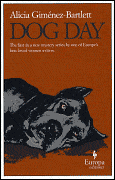
The first chapter of Alicia Gimenez-Bartlett's Dog Day, translated into English by Nicholas Caistor, contains lapses that an editor should have caught. "It was a chorus that made the hairs stand up on the back of my neck" should have been "The chorus made (the) hairs stand up on the back of my neck." That's basic. "It" constructions and the verb "to be" slow sentences down. If such constructions are acceptable in Spanish, too bad. Each language has its own quirks and peculiarities that may not translate well. A translator should take these into account and try to reproduce the effect of the original even if that means departing from literal, word-for-word translation. And if he or she fails to do so, an editor should step in.

Elsewhere, Caistor has a hospital patient prone, when he almost surely was supine. Was this patient really on his belly rather than on his back? Probably not, since Gimenez-Bartlett gives a description of his face. Did Caistor simply use the wrong word? Does a single word serve for prone and supine in Spanish? Too bad. Caistor is translating for an audience that reads English.

Other sentences tell when they should show. A character's tortoiseshell glasses "contrasted sharply with his juvenile appearance." Juvenile appearance? What does that mean? Or: "'Signor Garzon ... ' I declared theatrically, ' ... allow me to introduce Ignacio Lucena Pastor.'" Theatrically? Did she bow deeply, scraping the floor with an exaggerated flourish? Did she lower her voice to a stage whisper? In a workingman's bar, customers wear "different-colored overalls according to their line of work." Welders in grimy, scorched gray? Mechanics in white long since died black by accumulation of grease? Or is the intent to portray a dehumanizing regimentation of the working classes, sorted into colors by their bosses? We'll never know; all we get is "different-colored overalls."

Here, Caistor's task may be trickier. Does good Spanish writing simply not insist on the specificity of description that good English writing does? Are these simply weak passages on Gimenez-Bartlett's part? If so, what is a translator to do?

© Peter Rozovsky 2006

Technorati tags:


Labels: , , ,

Saturday, November 04, 2006

An arresting Spanish site

Detectives literarios is an interesting and eclectic site for those who read Spanish (and what better way to practice a language than reading about detective fiction?)

Among the detectives you'll meet in the introduction are Marco Didio Falco (Marcus Didius Falco, to those of us who read in Latin or English), Salvo Montalbano, Hercule Poirot, Perry Mason, Philip Marlowe, Joseph Rouletabille, Lew Archer, Philo Vance, Sherlock Holmes, Kurt Wallander, Guido Brunetti, Kostas Jaritos, Nastia Kaménskaya, Michael Ohayon, Harry Bosch, John Rebus "y tantos otros." Subjects of recent posts include Chester Himes, Patricia Highsmith and Yasmina Khadra. That's a nice list.

© Peter Rozovsky 2006

Labels: , , , ,