Tuesday, September 11, 2007

What Spaniards read

From time to time to time, I like to post about the crime fiction available to readers in other countries.

An article from Spain's El Pais newspaper that I mentioned in my most recent comment gives a snap shot of the novelas negras that were hot in Spain a few years ago. It's an interesting list, with current writers, classic writers, Americans, Canadians, Spaniards, Brazilians and others along with such usual Detectives Beyond Borders suspects as Andrea Camilleri and Friedrich Glauser. There are also the inevitable author or two who have yet to be translated into English.

The list is worth a browse even if you don't read Spanish. You can still recognize the authors' names and get, if not a taste of Spain, then at least an idea of Spanish readers' tastes. (Hat tip to Detectives literarios.)

© Peter Rozovsky 2007

Technorati tags:

Labels: ,

Saturday, September 08, 2007

... and, alas, another checklist of untranslated (into English) crime fiction

Krimi-Couch offers a list of crime fiction to be released in German this month. Among the new releases is Mensch ohne Hund, a translation of Håkan Nesser's Människa utan hund. That will bring to something over fifteen the number of this Swedish crime writer's books available in German. This compares with the two available in English.
==============================

Another question for readers: What crime authors would you like to see more of in English? Why?

© Peter Rozovsky 2007

Technorati tags:

Labels: , ,

Thursday, September 06, 2007

Another checklist of translated crime fiction ...

It's no longer August, but you can still read an article on translated crime fiction in that month's edition of Cluelass.com's electronic newsletter Deathstyles. The article discusses recent and upcoming work from Fred Vargas, Håkan Nesser, Andrea Camilleri, Leonardo Padura and others. If offers the encouraging reminder about Nesser that "there are another decade or so of books awaiting translation."

© Peter Rozovsky 2007

Technorati tags:

Labels: ,

Thursday, August 23, 2007

They noticed!!!

A BBC News article on crime fiction (its conclusion: crime fiction is still popular) includes the following, apropos of Matt Beynon Rees, author of The Collaborator of Bethlehem:

"Rees hopes to tap into the new interest in exotic crime fiction ... "

The canny connoisseurs of criminous exotica who read this blog have known about this new interest for some time, of course. (Hat tip to Sarah Weinman.)

N.B. Rees and his novel have been given new names in the UK. There, the novel is The Bethlehem Murders, the author Matt Rees.

© Peter Rozovsky 2007

Labels: , ,

Friday, August 17, 2007

Crime in an academic setting

I found out about this one only after the fact, but if I'd been in Ireland in June, I might have made my way to The Scene of the Crime: Setting in Modern Crime Fiction at the University of Limerick.

This academic conference drew scholars from Europe and North America to talk about setting in mysteries and, yes, one or two of the papers had goofy titles ("Bodyscape, or the Representation of the Body in C.S.I."). But there was plenty to interest serious readers of crime fiction. A paper in the "Unreal Places II" session was devoted to "Fred Vargas’s Mythical Sense of Place," for example, and another focused on "Murder in Swedish Arcadia: The Idyllic Setting in the Swedish Whodunit of the 1950s." Given the conference's location, it's no surprise Ken Bruen made it onto the program. He made it twice, in fact, in "Scene and Heard: Ken Bruen’s Defective Detective" "American Skin, Irish Masks: Ken Bruen’s Postmodernism."

I'll save the conference's program as a shopping list for writers whose work I'd heard of but not read -- Driss Chraïbi and Didier Daeninckx, to mention two -- and I'll look into others who were the subjects of intriguing-sounding papers. The organizers appeared to take crime fiction the way it ought to be taken if it is to be the subject of a conference: seriously, but without going over the top. The good people who put the event together billed it as the second interdisciplinary crime fiction conference of the Atlantic University Alliance, and if they'll allow a non-academic into their midst, I might attend the third.

© Peter Rozovsky 2007

Labels: ,

Thursday, August 02, 2007

Turn off the TV, and pick up a book

Sarah Weinman of Confessions of an Idiosyncratic Mind links to a 1978 article from Time about the state of crime fiction.

She quotes three paragraphs, of which one especially might make readers of this blog feel good:

It is a truism nonetheless that future historians may get their surest handle on today's world by studying Martin Beck's Stockholm, the Amsterdam of Van der Valk and Grijpstra, the England of Merle Capricorn and Adam Dalgliesh, Inspector Ghote's Bombay, José Da Silva's Rio, the Manhattan of Inspector Schmidt and Detective Steve Carella, Fred Fellows' Connecticut, Sam Spade's San Francisco and Travis McGee's Florida.
I got a special kick of seeing Janwillem van de Wetering's Grijpstra mentioned, though it was odd to see Grijpstra's name without that of his partner, De Gier. But my favorite sentence in the article is one that seeks to explain the popularity of mysteries. Though written in 1978, it is just as true today:

They are the insomniac's solace, the commuter's opiate, everymitty's escape from idiot box and cuckoo's nest.

© Peter Rozovsky 2007

Labels:

Tuesday, May 01, 2007

Clive James on international crime fiction, part II

He’s a sharp and funny guy but prone to overly sweeping statements.

Here’s an example of the former, from his New Yorker article Blood On The Borders: Crime fiction from all over:

Here’s one of the latter:
“ . . . there are only so many storylines and patterns of conflict. The only workable solution has been to shift the reader’s involvement from the center to the periphery: to the location. In most of the crime novels coming out now, it’s a matter not of what happens but of where. Essentially, they are guidebooks.”
Simenon, with the organization and instincts of a Colombian drug runner, got the whole world hooked on Maigret. Not only did Maigret sell by the million in every tongue and in all media; literary critics praised his author’s stripped-down style. … the Maigret novels acquired such prestige that Simenon’s action novels without Maigret in them started counting as proper novels, the absence of the star turn being thought of as a sign of artistic purity.
Well, no. I’ll cite Swedish crime writers again, since that’s who I’m reading these days. Håkan Nesser and Kjell Eriksson shift point-of-view characters frequently. In Eriksson’s case especially, the numerous shifts create multiple sympathies on the reader’s part, for cops, killers, victims and bystanders alike. I think of the technique as an objective correlative of Swedes’ proverbial social concerns: everybody has his reasons. It’s something distinctively Swedish, a reason other than setting or guidebook-style exotica to read Swedish crime writing.

© Peter Rozovsky 2007
Technorati tags:


Labels: , , , , ,

Monday, April 30, 2007

The New Yorker gets it partly right

I remember the night I figured out my place in the Philadelphia ******er's universe. I was proofreading stories in the sports department, and I came across one that said the local football team's quarterback had "shattered his knee." The trouble was that he had torn a ligament. Ripped, shredded or tore up might have worked, but shattered was plainly the wrong word to describe a tearing injury.

I pointed this out to the night sports editor, who looked at me as if I were from Mars. A reporter standing nearby added helpfully, "It's a matter of semantics." Well, yes, it was a matter of semantics – a matter of meaning, a matter of figuring out what you intend to say, then using the right word to say it. I don't remember if anyone corrected the mistake, but the night sports editor eventually enjoyed a career full of promotions ever higher into management, and the reporter eventually was rewarded with a major beat. As for good, crisp, accurate prose, the people who count at the ******er have always agreed with the eye-rolling reporter: it's a matter of semantics, in the dismissive sense of the word.

Why mention this here? Because I'm grateful to Clive James for raising the question of prose style in his recent New Yorker article, Blood On The Borders: Crime fiction from all over. It's a curious piece, with a conclusion that might anger crime-fiction readers and some slack reporting that frustrated this reader of international crime fiction, but it got at least one important matter right: Good prose is important.

James accuses Massimo Carlotto of bad writing, and he cites this example from The Master of Knots: “We’ve absolutely got to find a way of stopping the Master of Knots and his gang," Max said angrily. James fails to consider that poor translation may be the problem, but he's right; that's a bad sentence. I enjoyed seeing an attack on bad prose in crime fiction that went beyond ritual bashing of Dan Brown.

So much for one paragraph from Clive James' amble through the world of international crime fiction. Maybe I'll discuss the substance of his piece later. In the meantime, read it, and let me know what you think.

© Peter Rozovsky 2007
Technorati tags:

Labels: , , , ,

Wednesday, February 21, 2007

Passport to crime

Euro Crime brings the welcome news of Passport to Crime, a collection of twenty-six stories from Ellery Queen Mystery Magazine's monthly Passport to Crime feature. (I recommended that feature here in October.)

I read some of these stories when they appeared in the magazine, and I recommend Luis Adrian Betancourt's "Guilty" and Theo Capel's "The Red Mercedes" especially. Boris Akunin, Rubem Fonseca and A.C. Baantjer are among the authors represented.

© Peter Rozovsky 2007

Labels: , ,

Sunday, November 19, 2006

Grab your Italian dictionaries ...

... and get ready to read Il Falcone Maltese, an Italian magazine about crime and noir fiction, movies and television. The on-line version contains introductions to a wide variety of articles, news, interviews and reviews on crime and mystery Italian and foreign, past and present, current and classic: Gianrico Carofiglio and Orhan Pamuk, to name two in the current issue. For full texts of all the articles, you'll have to subscribe or visit Italy.

© Peter Rozovsky 2006

Technorati tags:

Labels: , , , , ,

Saturday, November 04, 2006

An arresting Spanish site

Detectives literarios is an interesting and eclectic site for those who read Spanish (and what better way to practice a language than reading about detective fiction?)

Among the detectives you'll meet in the introduction are Marco Didio Falco (Marcus Didius Falco, to those of us who read in Latin or English), Salvo Montalbano, Hercule Poirot, Perry Mason, Philip Marlowe, Joseph Rouletabille, Lew Archer, Philo Vance, Sherlock Holmes, Kurt Wallander, Guido Brunetti, Kostas Jaritos, Nastia Kaménskaya, Michael Ohayon, Harry Bosch, John Rebus "y tantos otros." Subjects of recent posts include Chester Himes, Patricia Highsmith and Yasmina Khadra. That's a nice list.

© Peter Rozovsky 2006

Labels: , , , ,

Friday, November 03, 2006

More from Bitter Lemon

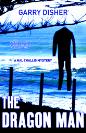
I, too, have now received notice of Bitter Lemon Press' updated Web site. As I noted when I first saw the new site, the latest catalogue contains a first for this fine imprint: two novels whose original language is English, Garry Disher's The Dragon Man (May 2007 in the United Kingdom) and D.B., by Elwood Reid (November 2006 in the U.K.).

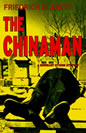
The site also brings the good news of another novel from the great Friedrich Glauser: The Chinaman, with publication dates of February 2007 in the U.K. and November 2007 in the U.S. Like the first three Glauser titles published by Bitter Lemon, this is translated by Mike Mitchell. Long before I ever thought much about the job translators do, I noticed an interesting challenge that Mitchell must have faced: how to convey the speech of characters who slip in and out of various German dialects. Here's what Mitchell had to say on the subject in an excellent article on translating crime fiction that I cited a few weeks back:

"Thumbprint ... is set in Switzerland and the language is an important part of the setting. (Whether Swiss is a 'dialect' or not is something I won't go into here.) Mostly the characters speak 'normal' colloquial German with the odd Swiss word or phrase. Sometimes they speak broad Swiss: this is impossible to copy, if only because there is no English 'dialect' which has a status and usage comparable to Swiss, not even Scots. ...

Glauser tells us his detective, Studer, normally speaks the German of Bern, though as I said above, what appears on the page is mostly ordinary colloquial German; but sometimes, when he's angry, Studer speaks 'formal' (close to written) German. The author points this out, as a way of indicating his mood. Another character speaks a mixture of Swiss and formal German which doesn't sound quite authentic and, again, Glauser points this out. I've copied this commenting on the characters' language, doing it in places where the author doesn't, where it seemed to me that the particular type of language used reflected mood or feeling. I felt I could do this because the author's 'voice' makes that kind of comment. Beyond that, I have kept a few Swiss words and phrases, where the meaning is clear enough, in order to try and emphasise the Swiss background (e.g. 'Chabis' = cabbage = nonsense)."

© Peter Rozovsky 2006

Technorati tags:

Labels: , , , , ,

Tuesday, October 24, 2006

Passport to crime

I've neglected to mention a regular source of international short crime fiction: Ellery Queen Mystery Magazine's "Passport to Crime" section.

Labels: , ,

Monday, October 23, 2006

A world of noir anthologies

You may have read Dublin Noir or either of two London Noirs. If you missed Brooklyn Noir, perhaps you picked up Brooklyn Noir 2. But how about Miami Noir, Paris Noir, Havana Noir or, from that hotbed of crime, Minneapolis/St. Paul, Minnesota, Twin Cities Noir? Are all available or soon to be published, many from Akashic Books.

The heads-up on many of these noirs comes from Maxim Jakubowski, that busy writer, anthologist and proprietor of Murder One bookshop. Jakubowki, editor of several volumes of Best British Mysteries, among other collections, reports that his Paris Noir should be out in the fall of 2007, with stories from French, British and other European writers, all of whom live or have lived in Paris. Jakubowski also reports that contracts have been signed for Rome Noir, with publication possible in 2008.

© Peter Rozovsky 2006

Labels: , ,

Saturday, October 14, 2006

Why international crime fiction is special

I posted a while back about an issue of Literature Matters devoted to crime. Here, I'll offer some excerpts from one of the articles, by Christopher MacLehose. The excerpts speak both to the high quality of much international crime fiction and to the reasons we read it. Perhaps they'll inspire you on your next trip to a bookstore:

Publishers will tell you that some of their best literary authors have, within the last decade, turned to crime.
...
If European crime fiction is attractive to British and American readers now in part it must be the attraction of the unfamiliar location, the unfamiliar politics. Petros Markaris' stories of municipal corruption in a brilliantly-rendered Athens are infinitely more instructive and entertaining than the wearisome regurgitations of many-times digested plots of political and union warfare in North America.
...
You are sometimes tempted to suggest to an author that a degree more attention to forensic study and results would be appealing to a British readership well versed in these matters. Karin Fossum told me once that she had written a thousand or more pages of forensic ‘stuff’ but had thrown them away because ultimately they were not what interested her about the case. She has proved the wisdom of writing her own books in her own way over and over. It is what gives her a huge following throughout Europe.
...
For the habitual reader of crime fiction this sort of variation of technique in an investigation, as in the context, is a pleasure, one that grows with familiarity.

Labels:

Monday, October 09, 2006

Some who takes crime writing seriously

Euro Crime has a link to a Literature Matters, an arts magazine that devoted its spring issue to crime. Of special interest are articles on Other Worlds and Crime Without Frontiers. There's something curiously appealing about that last title.

Labels:

Sunday, October 08, 2006

Found in translation

An exceedingly interesting article here about translators of foreign-language crime fiction into English, including short question-and-answers with a number of translators.

© Peter Rozovsky 2006

Technorati tags:


Labels: , ,

Thursday, October 05, 2006

Mysteries Around the World

That's the name of this directory from the Tulsa City-County Library. Click anywhere on the world map, and your computer takes you to a list of mystery stories set where you clicked. The lists include works both by writers from the countries they write about and from elsewhere. That last is not surprising in the case of the one book set in Antarctica.

© Peter Rozovsky 2006

Labels: , , ,

Wednesday, October 04, 2006

Road maps to crime

WhereDunnit offers handy maps to crime fiction set in continental Europe, the United Kingdom, and the United States. Call up a map, click on a country, region or state, and you get a list of crime books set there. A link to a map of the world does not appear to be working. The site includes a list of crime novels set in Europe.

Labels: , , ,

Tuesday, October 03, 2006

Crossing Britain's borders

From the Guardian via the Rap Sheet comes news of Bloody Brits Press, a new imprint that will seek to put hard-to-find British crime fiction in American readers' hands.

This is good news. I am reminded of Donald Westlake's comment bemoaning the lack of foreign films in the United States. Years ago, he said, he could watch Big Deal on Madonna Street for "a dozen post-graduate lessons in comedy." Now, he lamented, "New writers' brains are not being mulched in this way. What will be produced by people who think a good time is Spiderman?"

In movies, as in crime novels, crossing borders is good.

© Peter Rozovsky 2006

Labels: ,