Sunday, May 06, 2018

A Few Minutes of the Condor: James Grady at the Edgar Awards

James Grady. Photography by Peter
Rozovsky for Detectives Beyond Borders
Authors talk about how tongue-tied they get in the presence of their literary heroes.  Not me. I've made Susan Sontag and Fran Lebowitz laugh. I know from firsthand experience what one Nobel laureate thought of instant coffee.  And I've schmoozed giants of crime and thriller writing in limousines, outside banquet halls, by coat racks, and queued up for free booze.

Three years ago I wrote this after the 2015 Edgar Awards dinner of the Mystery Writers of America:
"I got my New York errands done early on Wednesday, slipped into a phone booth to change into my suit, and got to the ballrooms at the Grand Hyatt a few minutes before anything had started at Wednesday night's Edgar Awards. 

"At the end of the long anteroom outside the banquet hall, a bald man slouched on a bench, looking not nearly as tall as he does when gesticulating behind a podium.
"`Mr. Ellroy,' I said. `Congratulations.' 
"`I've met you before,' he said, extending his hand. 
"`You have. Otto's store, when you read from Perfidia.' 
"`Did you enjoy it?' he said, straightening slightly.  
"`I did. I read it in a week, a solid hundred pages a night.' 
"`That's the way to do it,' Ellroy said with an approving nod. `Steady reading, a couch, a dog.' 
"`Except for the couch and the dog, just how I did it.' 
"`Well, they want me in there. We'll talk later.' 
"`I'll be running up, getting in people's way, shooting pictures.` 
"`Shoot away.' Another approving nod.'
That meeting was funny, slightly awkward, and for me revelatory--or it would have been if I'd not already suspected that James Ellroy's outsize bluster masked a touching and eager vulnerability. I like to think that this colored my subsequent reading and rereading of his work, particularly Blood's a Rover, but also The Big Nowhere and The Black Dahlia.

I gained no such insight when I buttonholed James Grady at the 2018 Edgars a week and a half ago.   But I had just bought Grady's Six Days of the Condor, having no idea I would meet the author two days later, and I had to share the news. "Do you mind talking about a book you wrote so long ago?" I asked Grady. (Condor appeared in 1974, the film version starring Robert Redford the next year.)

"Not at all," he replied, smiling broadly, and we talked for a minute or two about that other Washington suspense novelist E. Howard Hunt, whom Grady said he had not known, and Hunt's fellow Watergate burglar Frank Sturgis, whom he had. (Grady writes about his discussions with Sturgis in an informative introduction to the Mysterious Press edition of Six Days of the Condor.)

So what's the lesson? If you're a reader or a writer, the writers you like are probably pretty interesting people who know pretty interesting stuff, and why would anyone be shy about chatting with someone like that?

© Peter Rozovsky 2018

Labels: , , , , , , , ,

Friday, May 06, 2016

The Sympathizer and Portnoy's Complaint: One man's squid is another man's liver

The last time the question of literary vs. genre came up, I suggested that if literary has any meaning with respect to crime fiction, it might apply to crime novels that work as something else as well, whatever that something might be. Qiu Xiaolong's Death of a Red Heroine deserved its place on one recent list of "literary" crime novels, as did Hammett's Red Harvest and James Ellroy's White Jazz,  though the novels are not especially similar. (One thing I'm pretty sure literary does not mean, or at least with which it is not synonymous, is written in ravishing prose. That's why I was skeptical of one fellow commenter's suggestion that James Crumley and James Lee Burke belonged on the list.

(The Barnes and Noble nearest to me shelves Ellroy in mystery and Lee Child in fiction and literature. I'll mention that the next time anyone talks about literary and genre.)

Viet Thanh Nguyen's The Sympathizer, winner of this year's Pulitzer Prize for fiction and Edgar Award for best first crime novel, is one current Great Obliterate the Distinction Between Literary and Genre hope, championed as such in a recent piece that hyperventilated more frantically than most without—naturally—offering any definition of literary. If I can find a link to the damned thing, I'll post it here.

I'm about a third of the way through the novel, and here are some reasons I think it might qualify as something in addition to (not more than) a genre book:
1)  It works its way into its genre-like plot, in this case espionage rather than crime, only slowly, telling us much along the way about the narrator/protagonist and his adventures in Saigon and California (if you say either character-driven or plot-driven, I'll shoot you between the eyes.)

2) Its humor is not just funny, but it also sheds entertaining cultural light, Here the protagonist, a native of northern Vietnam, observing a wedding celebration in California:
"Besides the simple yet elegant cha-cha, the twist was the favorite dance of the southern people, requiring as it did no coordination."

3) It pays tribute to, or at least echoes, another novel of American ethnicity, Portnoy's Complaint, using a squid where Philip Roth used liver.
Read an interview with Viet Thanh Nguyen.

© Peter Rozovsky 2016

Labels: , , , , , , ,

Wednesday, April 13, 2016

Photos from the 2015 Edgar Awards banquet

James Ellroy
The Edgar Awards, given by the Mystery Writers of America, are coming up April 28, 2016, and this year two friends and associates of Detectives Beyond Borders' are up for awards: Adrian McKinty, up for Best Paperback Original Novel for Gun Street Girl, and Duane Swierczynski, nominated in the best novel category for Canary.

Ian Rankin, Stephen King,
Karin Slaughter, Stuart Neville
I'll be there taking pictures, schmoozing, and maybe asking a question or two of 2016 MWA Grand Master Walter Mosely.  In the meantime, some photos I took at the 2015 Edgars.

Stephen King, Hilary Davidson
© Peter Rozovsky 2016
Sara Paretsky
Stephen King, Karin Slaughter
James Ellroy
Sara Paretsky

Labels: , , , , , , , , , , , ,

Monday, February 08, 2016

William Ard, James Ellroy, and elements of crime fiction style

"She said eight o'clock in the lobby. She said bring the hundred with me, in cash. She said good-bye."
*
"Clouds imploded. Buildings weaved. People blipped."
=======
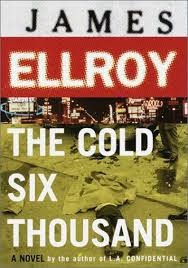
One of those passages is from James Ellroy, the other is fifty years older, but the cadences are similar, and if you don't think cadence is important, you've never read Ellroy, at least not The Cold Six Thousand, from which the second of the passages is taken.

The first is from William Ard's 1952 novel The Perfect Frame and, two books into my career as an Ard man, I begin to realize that for all the trouble he had coming up with strong endings, the man had style. His ten hard-boiled novels about P.I. Timothy Dane appeared in the 1950s, the years when Ellroy was growing from toddlerhood into early adolescence and, while I have no idea whether Ellroy read Ard, I have no doubt that he imbibed something of the way people spoke and wrote back then.

Style is a funny thing; style to me can be mere showing off to you. And it's elusive. Dashiell Hammett was the greatest of all crime writers, but what constitutes the Hammett style? 

While you ponder that unanswerable question, try these easier ones: What is style? Is good prose style necessary to good writing? Are the two synonymous?  Who are the most distinctive stylists in crime fiction? What's distinctive about their style, and what does that style add to their stories?

(By coincidence, Dana King discusses style this week at his One Bite at a Time blog. Have a stylish day.)

© Peter Rozovsky 2015

Labels: , , , ,

Saturday, July 18, 2015

Early Ellroy, politics, and perspective

I've been reading James Ellroy's earlier work, first The Big Nowhere (1988), second novel in the L.A. Quartet; and now Because the Night (1984), second of Ellroy's three Lloyd Hopkins novels, and Clandestine, a standalone novel from 1982. Here are some highlights, first from Clandestine:
"She was starting to like me, so I couldn’t bring myself to tell her she was nuts."
* 
"I laid on the more gentle, picaresque side of police work: the friendly drunks, the colorful jazz musicians in their zoot suits, the lost puppies Wacky and I repatriated to their youthful owners. I didn’t tell her about the rape-o’s, the abused kids, the stiffs at accident scenes or the felony suspects who got worked over regularly in the back rooms at Wilshire Station. She didn’t need to hear it. Idealists like Sarah, despite their naiveté, thought that the world was basically a shit place. I needed to temper her sense of reality with some of the joy and mystery. There was no way she could accept that the darkness was part of the joy. I had to do my tempering Hollywood-style."
Hindsight is perfect, of course, but it's easy to see in that first the line a microcosm of Ellroy's transition from something like conventional hard-boiled to the harsher and weirder stuff that he would write later. That "nuts" hits pretty hard.

For that matter, the second selection is, in retrospect, transitional, too.  The passage reads as if its narrator, a young cop, is just talking about the sort of violence and corruption into which later Ellroy protagonists would plunge headfirst and wholeheartedly.

Meanwhile, over at The Big Nowhere, the following suggests that for all Ellroy's gleeful proclamation that he is the White Knight of the Far Right, his books set in the 1950s poke far more serious fun at anti-Communist witch-hunt madness than it does at fellow travelers:
"A flick of the overhead light; the living room jarring white— walls, tables, cartons, shelves and odd mounds of paper— Loew and company’s once-in-a-lifetime shot at the political moon. Graphs and charts and thousands of pages of coerced testimony. Boxes of photographs with linked faces to prove treason. A big fuckload of lies glued together to prove a single theory that was easy to believe because believing was easier than wading through the glut of horseshit to say, `Wrong.'”
Not that he loved those fellow travelers:
"Hollywood writers and actors and hangers-on spouting cheap trauma, Pinko platitudes and guilt over raking in big money during the Depression, then penancing the bucks out to spurious leftist causes. People led to Lesnick’s couch by their promiscuity and dipshit politics.

"Deluded.

"Stupid.

"Selfish."

© Peter Rozovsky 2015

Labels:

Tuesday, July 14, 2015

"Ellroy’s a dipshit"

I'm not always a fan of self-reference in crime writing, but I found this bit hard to resist. It's from James Ellroy's Shakedown: Freddie Otash Confesses:
"They want to prime my prose and mold my moral vision. They’ve put me in telepathic touch with an earthling writer named James Ellroy.

"Ellroy’s a dipshit. I knew him in my waning months alive. I’ve been granted
tell-all telepathy. I will know that cocksucker cold." 
The real-life Otash was a police officer, private eye, and affiliate of the Hollywood scandal sheet Confidential, and Ellroy used him as a character in several of his novels. This novella-length book is useful and even illuminating as a companion to Ellroy's novels, with their conflicted cops and low-down losers:
"A fragmenting frustration set in. I had the dirt. It would take an armada of shakedown shills and photo fiends to deploy it. I racked my brain. I knocked my noggin against the bruising brick wall of unknowing. Extortion as existential dilemma. A confounding conundrum worthy of those French philosopher cats. 

"My cop life could not compete with the lush life. I was a double agent akin to that Commie cad Alger Hiss."
or how about this, which bespeaks an empathy readers may not associate with Ellroy:
"I scanned for boosters and looked down at legions of the lost.

"Their pathos pounded me. Bit actors buying stale bread and Tokay. Six-foot-two drag queens shopping for extra-long nylons. Cough-syrup hopheads reading labels for the codeine content. Teenage boys sneaking girlie mags to the can to jerk off. I watched, I peeped, I lost myself in the losers."
Or this:
"Confidential presaged the infantile Internet. Our gobs of gossip were repugnantly real. Today’s blowhard bloggers and their tattle texts? Pussyfooting punks all. We stung the studios and popped the politicians. We voyeur-vamped America and got her hooked on the devilish dish. We created today’s tell-all media culture."
© Peter Rozovsky 2015
   =============
 Read about Fred Otash and other interesting subjects in Ellroy's 2010 discussion with that other challenging and immensely entertaining novelist David Peace.

Labels: , ,

Sunday, May 03, 2015

Edgar Awards 2015 — James Ellroy on God and dogs

James Ellroy, photos by your
humble blogkeeper.
I got my New York errands done early on Wednesday, slipped into a phone booth to change into my suit, and got to the ballrooms at the Grand Hyatt a few minutes before anything had started at Wednesday night's Edgar Awards.

At the end of the long anteroom outside the banquet hall, a bald man slouched on a bench, looking not nearly as tall as he does when gesticulating behind a podium.

"Mr. Ellroy," I said. "Congratulations."

"I've met you before," he said, extending his hand.

"You have. Otto's store, when you read from Perfidia."

"Did you enjoy it?" he said, straightening slightly.

"I did. I read it in a week, a solid hundred pages a night."

"That's the way to do it," Ellroy said with an approving nod. "Steady reading, a couch, a dog."

"Except for the couch and the dog, just how I did it."

"Well, they want me in there. We'll talk later."

"I'll be running up, getting in people's way, shooting pictures."

"Shoot away." Another approving nod.


Ellroy talked about dogs again when he accepted the Mystery Writers of America Grand Master award. "My life," he told the crowd, "has been one long journey to commune with the talking dog."

This was — in part, at least —  a tribute to his publisher, Alfred A. Knopf, whose logo is a borzoi, or Russian wolfhound. Ellroy also said that he sees God in everything, offered the frank literary quotation that "a literature that cannot be vulgarized is no literature at all," and said: "My first words were, `Where's the book?'" and then, with a laugh I took as gently self-mocking, "and `Where's the booze?'"

Oh, and Stephen King swore more than Ellroy did.

© Peter Rozovsky 2015

Labels: , ,

Thursday, April 30, 2015

I shot Stephen King: Photos from the Edgar Awards dinner 2015

Stephen King (All photos by
your humble blogkeeper.
List of winners and
nominees
at the Mystery
Writers of America Web site.)

Charles Ardai
Sara Paretsky, Hilary Davidson
James Ellroy

Jon and Ruth Jordan
Ian Rankin, Stephen King, Karin
Slaughter, and Stuart Neville
Sara Paretsky and her shadow
© Peter Rozovsky 2015

Labels: , , , , , , , , , , , ,

Tuesday, April 21, 2015

It's almost time for the Edgars

It's almost time for the Edgar Awards, presented by the Mystery Writers of America and recognizing the best in crime fiction published in the U.S., and the 2015 awards dinner ought to be especially entertaining: James Ellroy is one of this year's two MWA Grand Masters.

I'll also be pleased to see Charles Ardai receive his Ellery Queen Award. Ardai is an entrepreneur, a publisher, an editor, and an award-winning author who changed the look of American crime fiction when he founded Hard Case Crime with Max Phillips. He's thoughtful, he's intelligent, and he's a nice guy to boot.

I'll get to see Jon and Ruth Jordan accept the Raven Award for outstanding contributions to crime fiction in an area other than creative writing, and, as I wrote when they won an Anthony Award at Bouchercon in 2009, "I feel quite sure that no one has deserved an award more."

Jon and Ruth publish Crimespree Magazine, and they organize Bouchercons. They are friends to authors everywhere, inspirations to all who know them, and they live in the world's coolest house: over the family machine shop, housing more books than the Library of Congress, with fresh sausage on the stove 24 hours a day, a bathtub filled with beer, and nooks and crannies even they probably have never seen.

The awards dinner happens Wednesday, April 29, at the Grand Hyatt in New York, and it's just part of a slew of events this week and next; here's a page with links to everything that's happening. Here's a bit about the Jordans, Ellroy, and their fellow special-award winners.  And here's a complete list of nominees, including Stuart Neville, whose Final Silence is up for the best-novel Edgar.

© Peter Rozovsky 2015

Labels: , , , , , , , ,

Friday, October 03, 2014

The books my Bouchercon panelists die for

Five members of panels I'll moderate at Bouchercon 2014 in Long Beach next month contributed to Books to Die For, John Connolly and Declan Burke's 2012 collection of essays by crime writers about their own favorite crime novels and stories. Here's some of what my panelist/contributors had to say about the writers who influenced them:
"Dexter's books are essentially puzzles. He once said that he was as anxious for the detective to manage without a pathology lab as he was for the crossword puzzler to manage without a dictionary."
-- Paul Charles on Colin Dexter 
"For all the talk of Hammett and Chandler as the founders of the hard-boiled feasts--and I revere them as much as the next guy or gal--it's Spillane and [James M.] Cain who were the most influential."
-- Max Allan Collins on Mickey Spillane 
"As she grew more successful and confident, the humanity began to drain from her books. Most of us would not act like the unruffled, aloof Tom Ripley, but every one of us could see himself falling into the abyss of cowardice and mendacity that finally drives poor Guy Haines to kill."
-- Adrian McKinty on Patricia Highsmith's Strangers on a Train 
"The greatest thing I've gained from Ellroy is the will to take my characters farther and deeper into the dark places than I, or the reader, might be comfortable with."
-- Stuart Neville on James Ellroy 
"This was not literature that uplifted the race. Cooper wasn't profiled in the pages of Ebony or, I imagine, discussed much, if at all, among the self-identified arts and literature crowd. The Urban League wouldn't be inviting him to speak at their annual dinner."
-- Gary Phillips on Clarence Cooper Jr.'s The Scene
===========================================
Paul Charles, Adrian McKinty and Stuart Neville will be part of my Belfast Noir: Stories of Mayhem and Murder from Northern Ireland panel at Bouchercon 2014 on Friday, Nov. 14, at 11:30 a.m.  Max Allan Collins and Gary Phillips will be part of my Beyond Hammett, Chandler, and Spillane: Lesser Known Writers of the Pulp and Paperback Eras panel Friday at 3 p.m..

© Peter Rozovsky 2014

Labels: , , , , , , , , , , ,

Thursday, September 18, 2014

James Ellroy, historical novelist

(Me and James Ellroy. Photo by a friendly bystander, photo
cropping and color desaturation by your humble blog keeper.)
James Ellroy says he "started out as a mystery writer, a crime writer. I became something else."

I've known that for a while, other readers of his recent novels have to have known it as well, and Ellroy has long said he doesn't write crime anymore. But what is that something else that he became?

A historical novelist, he said Wednesday at Mysterious Bookshop and, with his new Perfidia, a writer of historical romance. "In the course of going from mystery writer, from crime novelist, to historical novelist," he said, "I crafted the L.A. Quartet (The Black Dahlia, The Big Nowhere, L.A. Confidential, White Jazz)."

Perfidia is the first novel of a second L.A. Quartet. More than in the first quartet and more even than in the Underworld U.S.A. trilogy (American Tabloid, The Cold Six Thousand, Blood's a Rover), the book's action is rooted in the moment of history that provides its setting.

That moment is December 1941 (The book's action begins on Dec. 6), and the centerpiece is the roundup of Japanese and Japanese Americans in and around Los Angeles, what Ellroy calls "the great injustice of the Japanese internment."

Virtually everything else in the book--the killings, the sex, the breakdown of social boundaries, the shady land deals--flows from the fact of the internment, planning for which is underway through most of the course of the novel.

The book is populated largely by characters from Ellroy's previous books, portrayed this time as their considerably younger selves. The four protagonists are Hideo Ashida, a police chemist; William Parker, a police captain in 1941 and later the real-life Los Angeles police chief; the demonic police sergeant Dudley Smith, a fixture in previous books; and Kay Lake, a young woman from Sioux Falls, S.D., whom Ellroy called his greatest fictional creation.  The revisiting of characters from previous books will be great fun for readers of those books.  It also provides at least one shocking surprise.

The novel may lack the stylistic daring of The Cold Six Thousand and naughty shtick and grotesque comic high-jinks of Howard Hughes, J. Edgar Hoover, John F. Kennedy, and the Las Vegas mob bosses from previous books.  What is does offer is increased emphasis on tortured redemption, of the kind Wayne Tedrow Jr., Ward Littell, and Robert F. Kennedy exemplified in the Underworld U.S.A. books.

That, and more thinking about 20th-century American history. "The whole book is a riff on democracy," Ellroy said Wednesday evening. "1941 in America was a time of utterly outlandish belief," he said, and he called it a sign of American goodness and greatness that the United States did not fall to its own currents of lunatic populism, nativism, anti-Semitism and anti-Catholicism, the way other countries did.
*
Ellroy also offered thoughts on movie adaptations of his work. Three of the leads in L.A. Confidential (Kevin Spacey as Jack Vincennes, Kim Basinger as Lynn Bracken, and Russell Crowe as Bud White),  he said, were not believable as their characters.  He didn't say they were bad, just not believable. But--and this is why I would love to grill Ellroy further on movies--the movie is "not an outright dog, as I believe the overpraised Chinatown to be."

© Peter Rozovsky 2014 

Labels: , , ,

Sunday, September 14, 2014

Three early comments on James Ellroy's Pefidia

Three early comments on James Ellroy's Pefidia:
  1. A pointed stick used to find water is a dowsing rod, not dousing. (pg. 137) 
  2. One who objects to doing something is averse to it, not adverse. (pg. 385) 
  3. I enjoy the novel's jabs at the 1940s Hollywood Left, through the pen of Kay Lake, one of the novel's four central figures and, in her way, a thematic carryover from Ellroy's previous novel, Blood's A Rover:

    "The tall Negro with the huge basso. The Broadway showstopper-cum-slaves' lament. The dilettante leftists. The wayward girl from Sioux Falls. The unhinged police captain.

    "I giggled.

    "...A Princeton-educated Negro extolled class revolt; a frail woman with runs in her stockings strummed an oversize lute. I laughed and covered my mouth. The dowager whispered,
    Be still, child.'"

    Come to think of it, that's less a jab at the Left than a snapshot of an all-around insane period in American history (December 1941).
And here's a fine version of the song that gave the novel its title.

© Peter Rozovsky 2014

Labels: ,

Thursday, September 11, 2014

More on Beaux-Arts, books, and bouncers (Ellroy, Paul Charles, Joseph Nazel)

Here's a bit on what I bought in the land of Beaux-Arts buildings and of bouncers who are not so much stupid as they are the very idea of stupidity given human form, thick in body, thicker in mind, the kind who would be rejected for the role of a bouncer in a movie because they go a little over the top. (About the only thing to be said in favor of last night's specimen is that he did not wear a pony tail.)
  1. James Ellroy has said he no longer writes crime novels, yet I bought his new book at a crime fiction bookstore, Mysterious Bookshop, where, furthermore, Ellroy will appear next week. The novel's jacket copy makes the story sound an awful lot like a murder mystery, albeit with the grand historical sweep of Ellroy's recent books.
  2. Paul Charles' The Beautiful Sounds of Silence, my first novel in this Northern Ireland crime writer's Christy Kennedy series, looks set to take up a gruesome case with a degree of amused detachment. The opening chapter avoids the extremes of trivializing the crime with humor on the one hand and wallowing in its horror on the other. Charles says his inspiration for writing crime fiction was Colin Dexter, creator of Inspector Morse. That's not a bad model.
  3. Joseph Nazel's Death For Hire arrived earlier in the week. A hard-hitting tale of black ghetto life in 1970s Los Angeles from an author and editor who also wrote biographies of respected African American historical figures, the novel has its good guys and bad guys, glorifying none, but with a measure of understanding for all. Los Angeles author Gary Phillips discusses Nazel and other Holloway House authors in an article on black pulp fiction at criminal element.com.
==============
Paul Charles will be part of my Belfast Noir: Stories of Mayhem and Murder from Northern Ireland panel at Bouchercon 2014 in Long Beach, California, at 11:30 a.m, Friday, Nov. 14.
*
Gary Phillips will discuss Joseph Nazel as part of my panel on Beyond Hammett, Chandler, and Spillane: Lesser Known Writers of the Pulp and Paperback Eras, on Friday at 3.p.m.

© Peter Rozovsky 2014

Labels: , , , , , ,

Thursday, August 14, 2014

Celebrity then, celebrity now: What's the difference?

"People are ambivalently amped up on celebrities. They wildly worship them. They aim their adolescent adulation at them and get bupkis back. It's depressingly disassociative. It's idiotic idolatry. Fan magazines fan the flames of fatuous fancy and reinforce the fact that your favorite stars will never fuck you. Scandal rags rip that reinforcement and deliriously deconstruct and deidolize the idols who ignore you. It's revisionistic revenge. It reduces your unrequited lovers to you own low level of erratic erotics. It rips the rich and regal and guns them into the gutter beside you. It fractiously frees you to love them as one of your own." 
— James Ellroy, "Hush-Hush" 
That's James Ellroy in the voice of gossip columnist/sleuth Danny Getchell. Ellroy wrote the story in the 1990s, and the passage refers to an earlier generation of gossip magazines, presumably the ones from the 1950s and early 1960s that Ellroy says were a formative aspect of his upbringing.

Today's stars, of course, have made it out of Scandal Town and moved on up to Take Me Seriously City (originally settled as Clooneyville, before it seceded from itself, seeking greater control of its own publicity). They have taken ownership of their own personas and have left the scandals to the Snookis and Kardashians, selling empathy instead.  But the connection is no more real now than it was then. Or is it?

What is the difference between celebrity in the 1950s and celebrity now?

© Peter Rozovsky 2014

Labels: , ,

Monday, February 10, 2014

From Syria to Jalisco to Noir at the Bar in Baltimore

(Feasting Scene, Jalisco, Proto-
Classical 200 BC-AD 250. Earthen-
ware, red-slipped resist painting,
appliqué 20 1/4 x 19 3/4 x 17 in.
Walters Art Museum, Baltimore.)
(Bearded Figure
With Necklace
.
Syrian, 2400-
2000 BC. Terra-
cotta. H: 5 3/8
x W: 2 3/4 x
D: 1 5/16 in.
Walters Art
Museum, Baltimore.
Good fun Sunday at Noir at the Bar in Baltimore (That's a few of us at right, gathered around one of the evening's early readers.)

Some good stuff got read by Dennis Tafoya, Art Taylor, et al., not all of it unquotable on a family blog, but my favorite part was just hanging out and talking about writing and writers, notably with Dana King. Talk turned to James Ellroy, and author/Thuglit editor Todd Robinson said Ellroy made him nervous when they met.

Now, Robinson is wide, he's bald, and he's tattoo'd — not the first person I'd picture getting nervous in the presence of others. I took this as an endearing surprise, and also as evidence that despite Ellroy's intelligence, sensitivity, hard work, wide reading, and sometimes intense self-awareness, perhaps the man really does get close to the edge sometimes.

© Peter Rozovsky 2014

Labels: , , , , , , , , ,

Sunday, February 09, 2014

James Ellroy on Hammett, Chandler, America, and how young writers ought to act

James Ellroy's Paris Review interview from a few years ago contains a bit of advice that every young writer ought to call up on his or her smartphone immediately:
“[Ellroy] exhorted a class of aspiring screenwriters to quit smoking, get rid of their tattoos and piercings, and always address their elders as Mr. or Mrs. `Do this, and people will say to themselves, This kid knows his shit and understands that there is a social contract.'”
Also of note: Ellroy's  comment on why crime is important in American writing:
"We’re a nation of immigrant rabble. A great rebellion attended the founding of this republic. We’ve been getting into trouble for two-hundred-and-thirty-odd years. It’s the perfect place to set crime stories, and the themes of the genre—race, systemic corruption, sexual obsession—run rife here. In a well-done crime book you can explore these matters at great depth, say a great deal about the society, and titillate the shit out of the reader."
And his preference for Dashiell Hammett over Raymond Chandler:
"Chandler wrote the kind of guy that he wanted to be, Hammett wrote the kind of guy that he was afraid he was. Chandler’s books are incoherent. Hammett’s are coherent. Chandler is all about the wisecracks, the similes, the constant satire, the construction of the knight. Hammett writes about the all-male world of mendacity and greed. Hammett was tremendously important 
to me."
One might disagree with Ellroy's choice, and one might argue that writing about what he wanted to be rather than what he was is the whole point of Chandler's writing: "Down these mean streets a man must walk who is not himself mean."  But I was relieved to see a Chandler vs. Hammett comparison based solely on the two authors' work, rather than on politics.

© Peter Rozovsky 2014

Labels: , , ,

Friday, January 17, 2014

Ellroy book got O.J. wrong

Contrary to "Sex, Glitz, and Greed: The Seduction of O.J. Simpson," in James Ellroy's Crime Wave, Simpson never rushed for 2,033 yards in a season. The correct figure for Simpson's record-breaking year (1973) is 2,003 yards.  The book's  introduction, by GQ's then-editor, Art Cooper, also notes the passion of Ellroy's Simpson essay, observing that
"Several months ago, James was in moral high dudgeon again, this time outraged at Bill Clinton's sexual dalliance with Monica Lewinsky and his rather bizarre pronouncement that a blow job really isn't sex. James was itching to rip Bubba, and I, perhaps unwisely, declined."
Why "rather bizarre"? Was Clinton's pronouncement bizarre, or wasn't it? And where's the introspection beyond the suggestion that Cooper "perhaps unwisely" declined Ellroy's offer to write about Clinton? A neutral observer might suspect fear or political partiality.

The Simpson piece is full of incisive observations that would be banned for their accuracy from family newspapers. My favorite:
"O.J. Simpson will have truly transcended race at that moment when Blacks and Whites get together and recognize him as a cowardly piece of shit who may or may not have murdered two innocent people and left two Black and White children devastated for the rest of their lives."
My other favorite moment so far in this 1999 collection of fiction and reporting reportage is what purports to be a 1998 article from the Advocate about the fictional columnist for Hush-Hush, Danny Getchell. Scandal sheets, according to the article, "destroyed the lives of many gay and lesbian Americans, and Hush-Hush was arguable the worst of the lot."

"Gay and lesbian Americans" suggests that Ellroy has a sharp ear, that he was ahead of the semantic curve (or that I was behind it). The story first appeared in GQ in 1998. I was surprised six years when New Jersey's then-governor, Jim McGreevey, told the state not "I am gay," but "My truth is that I am a gay American."

© Peter Rozovsky 2014

Labels: , , , , , , ,

Thursday, January 16, 2014

Nelson Algren: The answer, plus what the ancients can teach us

Yesterday's post here at Detectives Beyond Borders asked What ever happened to Nelson Algren, and why? The good people who run the Nelson Algren Twitter account suggested I might find some answers here. The article's headline:
"Despite his literary brilliance and humanist resolve, Nelson Algren was the type of loser this country just can't stomach."
***
 I miss the medal stand in the How Many Books Do You Own? Olympics (fourth place, behind Ali Karim, Jon and Ruth Jordan, and the Library of Congress), but I still can't take three steps anywhere in my house without tripping over a pile of mid-listers. So I took two bags of books to a used bookstore today and traded them for credit and three books.

Two of the three have some connection to crime: James Ellroy's Crime Wave, and Sophocles' Oedipus plays. Everyone knows about Oedipus Rex's sublime plotting, but what grabbed me was Oedipus' declaration in the prologue that
"Children!
"I would not have you speak through messengers
"And therefore I have come myself to hear you."
That has to be as good a job as any writer has ever done getting right to the heart of the action without, however, resorting to desperate action for the sake of action. It's a perfect balance among action, atmosphere, and suspense.  The ancients have much to teach us.

© Peter Rozovsky 2014

Labels: , , , , , , , ,

Monday, January 06, 2014

I learned quite a lot when I was young: Youth, fiction, and history

At what age is a writer most susceptible to impressions that later find their way into his or her fiction?

Adrian McKinty sets his Sean Duffy trilogy (Cold Cold Ground, I Hear the Sirens in the Streets, and the new In The Morning I'll Be Gone) in a time when the author was 13 and 14 years old and growing up in Carrickfergus, Northern Ireland. John McFetridge's forthcoming Black Rock takes place in Montreal in 1970. McFetridge was 11 and living in Montreal at the time. And James Ellroy was 10 and 11 during the years that are the setting for American Tabloid, first of his Underworld U.S.A. trilogy.

Three authors, three bodies of work set in turbulent periods of  their countries' history, the turbulence coinciding with the authors' pre- and early adolescence. Happenstance? Here's Dana King, from a comment on this week's historical-fiction post here at Detectives Beyond Borders:
"You're right about the images the writers grew up with; I see it in my interest. I enjoy recent historical fiction more than that of more distant periods for a couple of reasons. A lot of this happened when I was of an age to understand it, but not to place it into context. To me, growing up, it was natural for mills to close and for one or two American cities a year to burn with riots; it's what I knew. These books help me to re-examine these periods and events with some context.
"They also allow me to see how the roots of today's problems were always there; many things have changed at their core very little, though they look different now. I remember how upset people were in the 80s and 90s when it was reported the black drug gangs were killing innocents with drive-by shootings, and recruiting grade school kids as runners, as they'd do no time. It wasn't like they thought of the idea; organized crime had done both for years."

None of the works under discussion is a coming-of-age book. Though the authors were 11 to 14 at the times when the novels are set, the protagonists and all significant characters are adults. Did McKinty, McFetridge, and Ellroy just happen to be the right age when their countries and cities, were going through changes (the Troubles in Northern Ireland, the October Crisis in Montreal, the Cold War in the United States)? Or does something about ages 11 to 14 make authors want to re-examine the worlds of their post-childhood, pre-teenage youth? Comments from historians and developmental psychologists welcome.
*
McFetridge's protagonist is a young cop named Eddie Dougherty called to the scene of an explosion that blew a car apart on Montreal's Champlain Bridge:
"Dougherty watched the police photographer, Rozovsky, take a hundred pictures of the wreckage and dozens of every body part they could find and then stop and change lenses on the camera and then turn and aim it back towards the skyline of Montreal.
"One of the detectives said, `What's that for?' and Rozovsky said, `It looks like a postcard.'
"`You can't sell a picture you take while you're on the clock.'"
"Rozovsky snapped off a few more shots and said. `It's for my personal collection.'"
"`Yeah, your personal collection on the rack in every drugstore on town,' and Rozovsky said, `From your lips ...'"
So yes, I have a special reason to like this book. And now, for your listening pleasure, the Animals.

© Peter Rozovsky 2014

Labels: , , , , , , , , ,

Thursday, January 02, 2014

Comments on and one correction to James Ellroy's American Tabloid

1) The item of jewelry one pins to one's clothing, sometimes as a fastener, is a brooch, no matter how many times American Tabloid spells it broach.

2) I don't like pat critical phrases, but American Tabloid really is compulsively readable. I've tried to get to bed early the past few nights, slipping under the covers by 2 a.m., intending to read a few pages, then get up early and work the next day, but I was still reading at 4 and 5 a.m. Here are a few examples of what makes the novel so much fun:
"Hoffa said ` ... don't make Kennedy sound like Jesus handing God the Ten Commandments on Mount Fucking Vesuvius.' 
"Ryskind said, `Santo was just making a point.' 
"Rosselli said, `It's Mount Ararat, Jimmy. Mount Vesuvius is in fucking Yellowstone Park.'"
*
— A list of Marilyn Monroe's lovers, as turned up by FBI surveillance, that includes "David Seville of David Seville and the Chipmunks," but not John F. Kennedy.
*
"Kemper sat down. `You speak excellent English, too.' 
"`I speak the slow and exaggeratedly formal English of the laboriously self-taught. Native speakers tell me that I sometimes lapse into hilarious malapropisms and mutilations of their language.' 
"Stanton pulled a chair up. `Would you mind talking with us now? We've got a nice apartment ready for you, and Mr. Boyd will drive you there in a little while.' 
"Paez bowed. `I am at your disposable.'"
See you soon. I have work to do.

© Peter Rozovsky 2014

Labels: , , , ,