Monday, May 26, 2014

Mike Nicol on South African crime writing

I've been back on the South African crime fiction bandwagon in recent days, with James McClure, Mike Nicol, and Diale Tlholwe, all of whom who have reminded me how exciting South African crime fiction can be. What better time to bring back Nicol's guest post about South African crime fiction? Matters have changed since I first put up the post; several of the authors he mentions have published new books, and at least one has died. Most notably, perhaps, that excellent Cape Town thriller writer, Roger Smith, has come into the picture. As a further update, here's a list of twenty top South African crime novels, from the Crime Beat Web site. But Nicol's essay remains a valuable introduction to and outline of one of the world's most interesting and vibrant crime-fiction scenes. Thanks again, Mike.

(Since soccer's World Cup begins in a couple of weeks, here's an illustration to bring back memories of South Africa 2010. Anyone remember what that instrument at the upper right is?)
=======================

Despite the vibrancy of thriller and crime fiction elsewhere, not much has happened in SA crime fiction over the last five decades. Until recently that is. This isn’t exactly surprising as the cops have been more or less an invading army in the eyes of most of the citizenry since forever. Certainly, come the apartheid state in the late 1940s no self-respecting writer was going to set up with a cop as the main protagonist of a series. It was akin to sleeping with the enemy.

So to get round this, in the late 1950s, a young woman named June Drummond found a way to enter the genre with a novel called The Black Unicorn that used an amateur sleuth to solve the mystery. Hers was the first crime novel in English, although some four years earlier, a popular magazine, Drum, that had a vibrant readership in the townships, ran a series of short stories featuring a character called the Chief. The author, Arthur Maimane, was hugely influenced by the US pulps and the stories were derivative but highly entertaining. Unfortunately they’ve never been collected although there is one to be found in the Crime Beat archives.

In Afrikaans crime fiction also took decades to reach maturity. During the 1950s there’d been cheaply printed novels featuring steak-loving, hat-wearing detectives investigating single murders. Often these stories were set in small towns and tended more towards pulp fiction than noir. After that Afrikaans crime fiction all but disappeared during the height of the apartheid era.

In English the thriller side of the genre was taken up by, most notably, Wilbur Smith and Geoffrey Jenkins, during the 1960s but it was not until the end of that decade that a major figure emerged – James McClure with a novel called The Steam Pig. This book introduced two cops, Tromp Kramer and Mickey Zondi. They would feature in a series that spanned the 1970s, disappeared for the 1980s, and finally ended with a prequel in 1993, The Song Dog. McClure’s twosome have gone some way to setting a convention for SA writers: the clever underling Zondi, the unsubtle Tromp with his built-in racism. In fact the books were highly satiric yet only one was banned, The Sunday Hangman. McClure died [in 2006] , after spending most of his life in the UK in Oxford.

McClure’s absence during the 1980s was filled by a different sort of crime thriller, a series written by Wessel Ebersohn, featuring a prison psychologist, Yudel Gordon, as the protagonist. Ebersohn published five Gordon novels up to 1991. The 1990s, however, were to see a number of changes, not least the change in the country to a democracy with the 1994 general election that ended the apartheid state. Overnight, well, almost overnight, the cops became the good guys and our literature started taking on a different perspective. But it takes some time for a country to mature and give itself permission to write and read escapist books, especially as we’d been used to writing and reading as an act of protest.

For the current crime thriller writers, the 1990s were significant because of a man called Deon Meyer. His novels first appeared in Afrikaans and made it to the top of Afrikaans best-seller lists. Meyer not only revolutionised Afrikaans literature but he was well translated into English and these books opened the genre to new voices. All the same it took a number of years – six in fact – before Meyer was joined on his lonely platform. In 2005 Richard Kunzmann published the first of his Harry Mason and Jacob Tshabalala series, Bloody Harvests, and Andrew Brown won the Sunday Times Fiction Prize for his Coldstream Lullaby – proving that a krimi could out-write the literary reputations. Also new Afrikaans figures appeared: Francois Bloemhof, Piet Steyn, Quintus van der Merwe, and Dirk Jordaan among them.

As for the sort of topics that have engaged these writers, well, initially serial killers – or to put it in a broader perspective, crimes of deviancy – were the subjects of choice for both English and Afrikaans writers. Perhaps in this there was a desire to steer away from the political issues dominating a nation in transition, although this attitude is changing. Social and political concerns are back on the agenda, and the bad guys are now as likely to be politicians, business moguls, and figures of authority as perverts, drug dealers, serial killers and gangsters.

Recent titles include Margie Orford’s Like Clockwork and Blood Rose, Richard Kunzmann’s Salamander Cotton and Dead-End Road, Angela Makholwa’s Red Ink, and Jassy Mackenzie’s Random Violence.
======================

Meet Mike Nicol and his mates from Crime Beat here. For more information, reviews and interviews with SA crime novelists, check out the Crime Beat blog, which includes a who's who of South African crime writing.

Reliable online book shops selling South African crime fiction are:
Kalahari.net, Loot.co.za and Exclusive Books.

© Peter Rozovsky 2008, 2012

Labels: , , , ,

Friday, June 10, 2011

Karin Slaughter on crime fiction beyond borders

Besides having a fine name for a crime writer, Karin Slaughter has a tantalizingly dark, self-conscious sense of humor. Asked during a panel at Bouchercon 2010  for  a happy book-tour story, she demurred.  "All of my nice stories are tinged with personal horror," she  replied, to much laughter from the audience.  

I remembered that reply when a publicist asked if I'd host Slaughter on a blog tour to promote Fallen, her eleventh novel and the third in her Georgia series. I also remembered — or thought I did — that one of her anecdotes at that Bouchercon panel involved a sauna in one of the Nordic countries. This moved her closer to normal Detectives Beyond Borders territory.   "Fine,"  I told the publicist —  if Slaughter  could come up something that crossed national lines.

Ladies and gentlemen, Karin Slaughter.

========================
Being an American crime writer comes with its perks, namely that no matter how violent or shocking you make a novel, European audiences will totally believe that any atrocity is possible in an American setting. I suppose we have our pop culture to blame for this. If aliens are monitoring our planet through American media, they will no doubt perceive our men as either highly violent or henpecked, and our women as raging, alcoholic sluts or nagging girlfriends and wives. Which might help explain why the aliens haven’t bothered to come here.

For many years, American crime writers used our perceived violent society as shorthand for character development. There was no bad guy an American detective or PI couldn’t take down. There was no crime so horrific that our white knight couldn’t prevail. And no matter whether he was shot, tortured, beaten or stabbed, he always found time to make love to the tragic heroine in his life. Dashiell Hammett gave way to Raymond Chandler. Mickey Spillane begat Ross McDonald begat Elmore Leonard and Walter Mosley and so on and so on.

Our overseas counterparts haven’t had it as easy. Their pop culture does not work as shorthand. Sure, James Bond always got his man—and his woman—but the brutality of Fleming’s anti-hero was dumbed down for the masses when Bond made the transition to the big screen. It was as if the filmmakers had to Americanize him to make it believable that a British spy would have such a pivotal role in international crime-fighting. Bond was Superman using the Queen’s English.

While American crime writers were mining the familiar tough-guy tropes, Europeans were cobbling together a more nuanced vision of the world. Let’s keep in mind that post WWII, many countries were struggling to make sure there was enough food on the table. The Marshall Plan in all its wisdom created a set of homogenous countries that saw their national identities unchallenged for over a quarter of a century. Thus, European literature became more focused on the day-to-day struggle of existence and what it meant to be British or German or Swedish. By the late fifties, the French had almost completely erased plot from their literature. Stripping away action to make room for strife became the standard by which “good” authors were judged. The excesses of their cross-Atlantic counterparts seemed lush and full of spectacle compared to the small stories of struggle that native authors were creating.

By the sixties, we saw an amalgamation of these cross-Atlantic forms. The Beatles and the Rolling Stones weren’t our only artistic imports. I think the greatest American beneficiary of the European literary influence was Patricia Highsmith, whose work hit its stride during this tumultuous decade. An ex-pat living in suburban Moncourt, she successfully married American-style plotting with European pathos. While Hollywood eagerly produced adaptations of Highsmith’s work, her books were considered too dry, too introspective and too European by most American audiences. While they accepted this sort of thing in Daphne Du Maurier, they never embraced Highsmith’s take on the form. This is the sort of snobbery that still exists in America today, where critics will celebrate the work of Europeans over Americans because our ruling elite believe that everything sounds better with an accent.

Of course, our ruling elite don’t often deign to read crime fiction, or at least not the books labeled as crime (To Kill a Mockingbird, The Lovely Bones, Alias Grace—these are literature, not crime fiction novels about a rape trial, a pedophile and a murderess, respectively.) The everyday reader of crime will tell you that we have all benefited from globalization. One look at the bestseller lists show many familiar names alongside foreign ones. Current American crime writing is far more nuanced than the tough guys of Chandler’s noir. Women are no longer props, only there to be saved or screwed. European crime has changed as well. They’ve not only found the plot, but morphed their work into tense studies of humanity’s response to violence. We influence each other even as we influence ourselves. The relationship is simpatico in every sense of the word.

Every form of art is cyclical, but I think there are no finer examples of good American-born writers than Lee Child, Michael Connelly, Megan Abbott and Gillian Flynn. When I look across the pond at writers like Mo Hayder and Denise Mina, then farther still at Sara Baedel, Liza Marklund and Tomas Ross, I think that we’re seeing the true evolutionary vision of crime stories. There is no longer such a thing as big American crime fiction and little European stories. Neither is there English nor German nor Scandinavian crime, though people seem desperate to put them all into different, market-driven categories. We’re living in a golden age of good literature, where setting is neither exotic nor foreign; it exists as an omniscient narrator pulling the reader into the author’s world vision.
===========

Labels: ,

Friday, May 07, 2010

More sketches of Spain: P.J. Brooke on Spanish crime fiction, Part II


P.J. Brooke is the husband-and-wife team of Philip J. O’Brien and Jane Brooke. A Darker Night, their second novel featuring Sub-Inspector Max Romero, is due from Soho/Constable this summer. Part II of their survey of Spanish crime fiction for Detectives Beyond Borders takes in well-known names, prize winners, regional writers and foreign authors who set their work in Spain. (Read Part I here.)
===========================

Problems of identity play an important role. The fiercely independent regions of Catalunya, the Basque country and Galicia have produced crime novels first written in local languages: Itxaro Borda’s in the Basque language and Carlos G. Reigosa’s in Galician. Women novelists have, for the first time, also come to the fore. Borda’s investigator is (good heavens) lesbian.

Since the 1990s, Arturo Pérez-Reverte has dominated the Spanish mystery scene. The Dumas Club is a Gothic tale about rare books that strays into Dan Brown territory but does it far better. It was filmed by Roman Polanski as The Ninth Gate with Johnny Depp. The Flanders Panel, The Fencing Master, The Seville Communion and The Queen of the South are all strong, meticulously researched, historically based tales, a little ornate at times, but never boring.

Liberty vs. social responsibility
Lorenzo Silva, one of Spain’s most successful crime writers, has produced two very modern Guardia Civil officers in the Basque Ruben Bevilacqua and his assistant, the Mallorcan Virginia Chamorra, both of whom grapple with conflicts between individual liberty and social responsibility in a democratic Spain and reflect changing perceptions of cops. Unfortunately his novels are not translated into English.

Juan José Millás parodies the detective form to explore the relations between appearance and reality. And Eugenio Fuentes’ Depths of the Forest, Blood of the Angels and At Close Quarters revert to the more traditional psychological investigation.

Carlos Ruiz Zafón’s novels deserve special mention. The Shadow of the Wind, set in Barcelona in 1945, explores the psychological pressures of fascism. and censorship. A thriller, the book isn’t perfect, but in translation, extremely popular.

At the more literary end of the scale, José Carlos Somoza won the 2002 Crime Writers Association Gold Dagger for The Athenian Murders, a re-creation of a deeply strange but utterly believable ancient Athens. Javier Marías won the Dublin IMPAC award for A Heart so White. It’s a thriller, but slow and subtle, unravelling how a young translator is drawn into a mystery in his own family.

Foreign crime writers in Spain
After years of foreign tourists, Spain is now coming into its own for foreign crime writers. American Rebecca Pawel’s series is set immediately after the Civil War. Her Lieutenant Carlos Alonzo y León comes from one of the families that did well out of the war. Robert Wilson ’s Inspector Falcón explores modern Seville, while our own Inspector Max Romero uncovers both the beauty and the dark side of a cosmopolitan Granada. Others are sure to follow.

Spanish crime novelists grapple mostly with Spain as it is, its problems of social mobility, migration and dislocation, endemic corruption at local, regional and national levels, the economic boom and now the bust, new immigrants crossing the narrow straits that separate Spain from Africa and flying in from Latin America, the drugs and people-trafficking. Spain inclines more to the American hard-boiled social criticism tradition than to the English whodunit and is the better for that.
===========================

Labels: , , ,

Wednesday, May 05, 2010

War, crime and politics: P.J. Brooke looks at Spanish crime fiction

===========
"Only after Franco’s death in 1975 did mystery novels come in from the cold, when writers used them to ask tough questions about Spanish society and question state-sponsored police procedures."
===========

P.J. Brooke is the husband-and-wife team of Philip J. O’Brien and Jane Brooke. They divide their time between Scotland and Granada. Their second novel featuring Sub-Inspector Max Romero, A Darker Night, is due from Soho/Constable this summer. In Part I of a two-part survey, they look at Spanish crime fiction from its beginnings until its liberation, with the death of Francisco Franco in 1975. (Read Part II of P.J. Brooke's survey of Spanish crime fiction here.)
======================
Medieval Spain was Jewish, Christian and Muslim, a culturally diverse, vibrant patchwork of Muslim and Christian principalities.

But in 1492, the Catholic kings defeated the last Muslim kingdom, and Columbus discovered the Americas. Los Reyes Catolicos celebrated by expelling Jews who did not convert to Christianity, and later, the Muslims. Church, crown and military created a repressive Catholic state that lasted, almost without let-up, until the death of General Francisco Franco in 1975. Spain was not the easiest place to be a writer.

Despite civil wars, censorship and a small reading public, some good novels were produced in nineteenth-century Spain. In 1853, 13 years after Edgar Allan Poe invented the genre, Pedro Antonio de Alarcón wrote Spain’s first mystery, The Nail and other Tales of Mystery and Crime. Translations of the Sherlock Holmes stories led to local imitations, but the mystery novel never really caught on, and Alarcón, Peréz Galdós and their contemporaries were more influenced by Sir Walter Scott, Dickens and Balzac than by Wilkie Collins.


Civil War turned back the clock
The Spanish Civil War of 1936-1939 turned the clock back as writers went into exile. In the 35 years of Franco’s dictatorship that followed, Spain was isolated from Europe and North America. Mysteries were published but heavily censored, and, of course, they were conventional police procedurals.

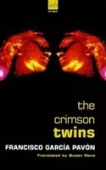
Francisco García Pavon wrote novels featuring local Police Chief Manuel Gonzalez “Plinio,” and his Dr. Watson, the veterinarian Don Lotario. The Plinio novels, set in a Spanish provincial town, were very popular and were made into a TV series. But they are mild in a Miss Marple way, where Franco’s cops were brutal and corrupt. Only after Franco’s death in 1975 did mystery novels come in from the cold, when writers used them to ask tough questions about Spanish society and question state-sponsored police procedures.


Breakthrough in Barcelona
The breakthrough happened in Barcelona, with a clutch of novels that depict a city riddled with corruption, violent and raw. Francisco González Ledesma’s Commissioner Ricardo Mendez stories were originally banned under Franco. Manuel Vázquez Montalbán’s series has an ex-Communist private investigator, Pepe Carvalho, and a call-girl assistant (Murder in the Central Committee). Eduardo Mendoza’s investigator is paranoid-schizophrenic.

In Madrid, Juan Madrid’s Chandlerian hero, Toni Romano, was an ex-cop, boxer and debt collector. Madrid’s other books featured Manuel Flores, a gypsy police officer coping with prejudice. Jorge Martínez Reverte ’s journalist investigator, Julio Galvéz, investigated crimes all over Spain, illuminating social and political problems. Galvez en Euskadi dealt with the Basque terrorist ETA.

Younger writers have carried on this tradition, among them Teresa Solana in A Not So Perfect Crime, a stylish and witty portrait of Barcelona’s nouveau riche, and, in Madrid, novels by Elvira Lindo, David Torres and Antonio Jiménez Baza.
======================

Labels: , , ,

Wednesday, December 03, 2008

Letter from South Africa, Part III

The excerpt from Deon Meyer's Blood Safari in yesterday's post was courtesy of the indefatigable Mike Nicol of Crime Beat (South Africa). He had sparked my curiosity with his observation that:

"We have also watched a venerated liberation movement slide rapidly off the high moral ground to wallow in greed, arms-deal kickbacks, fraud, corrupt land deals, you name it, without being of much help to a huge population of poor people for whom life hasn't changed. But I rant now. It's best to leave these things for funny asides between one's characters."
Naturally I asked for examples. Yesterday's excerpt was one. Here's the rest of Mike's letter:
"As crime has become a major problem in South Africa, and the state has neither the will nor the means to protect the citizenry, the private security industry has grown in leaps and bounds. Cop stations even have armed-response contracts with private security companies. An off-shoot of this has been vigilante groups, especially in the black sectors of society. Richard Kunzmann brought this phenomenon into his latest novel, Dead-End Road. In this scene Harry (his cop protagonist) gets told about a vigilante group called the Abasindisi that operates in the rural areas. The conversation plays about between Harry and one of his contacts in the townships, Makhe.

"`[…] you have a uniform, you have a gun. You are a symbol of violence that is state-sanctioned,' [said Makhe].

"`Yes?’

"`So any man that wants to protect his home when the state won’t do it has to create that same symbol for himself. He must be feared as a police officer is feared. Perhaps the Abasindisi’s methods involve what you might call crimes, but then the threat of violence you cops use to earn respect on the streets might also be considered criminal, only you can hide behind the barricades of laws and bureaucracy. You warp the process of justice to protect each other. No, English,
[Harry is an English-speaking South African] these men, they exist because our state has forgotten us, because you cops only have your own interests at heart, and because not much has changed for us poor, apartheid or not. We are still left to fend for ourselves.’"

"The new crime writers have also turned their attention to the industrial giants. One of these is the diamond-mining concern, De Beers, which has long been accused of nefarious practices in their bid to control the diamond market. In his 2007 novel about blood diamonds,
The Fence, Andrew Gray thinly disguised De Beers behind the name of his fictional Brano. In this extract the head of security at Brano, known only as The General, briefs an operative, Jan Klein, using the euphemistic double-speak that hides a language of violence:

"`I have said that Brano is a commercially-driven organisation, Jan Klein. This means, as you will soon discover, that we are also, necessarily, incentive-driven, conferring greater autonomy on employees, encouraging initiative and innovation, creativity but without prejudice, as it were.'

"He was smiling now as he used the legal term. `Without prejudice to the important notion of accountability.”’

"
In my own novel, Payback, I was handed an arms scandal on a plate. An investigative journal, Noseweek, had discovered that despite a cabinet order to destroy an ammunition surplus, some officials had decided to make use of this surplus to run a small arms trade on the side. They were dealing with a company called Industrial Spreewald Lubben and had netted themselves some R12 million. In the extract a government agent, Mo, explains to two former arms dealers, Mace and Pylon, how it’s done.

"`What they’re then doing, the Krauts,’ [Mo] explained, `is selling it on to the United States. Guys there can’t get enough of our surplus for practicing and hunting. Mostly 5.56mm and 7.62mm. We got maybe a billion rounds supposed to be destroyed or dismantled. Which is a waste when you consider there’re people willing to pay for it.’ He drew on the Montecristo, blew the smoke out in a plume.

"Pylon said, `Makes you wonder what the boers
[Afrikaners] were thinking producing all those rounds. Like they were heading for a major war.’
"`Silly buggers,’ said Mo. `On the other hand what we’ve got here is what we call unofficially The Opportunity. Not something the minister wants to hear about, but then not something he’s inclined to stop either supposing he has heard about it. Which he must’ve. Income is income.’ He flicked off a stub of ash, glanced from Pylon to Mace. `Welcome to The Opportunity. We’re happy to do business with you.’

"`Again,’ Mace said.

"Mo chuckled. ‘` suppose you could say again, in a manner of speaking. I suppose should you look at it in a certain light the cause is the same: the upliftment of the people. Fair trade. Guns ‘n ammo for houses.’ He pulled out the shopping list Pylon had hand-delivered earlier in the week. `I can get these,’ he said, tapping it with the damp end of his cigar, `any time you want, as the man said.’"
© Peter Rozovsky 2008

Labels: , , , , , ,